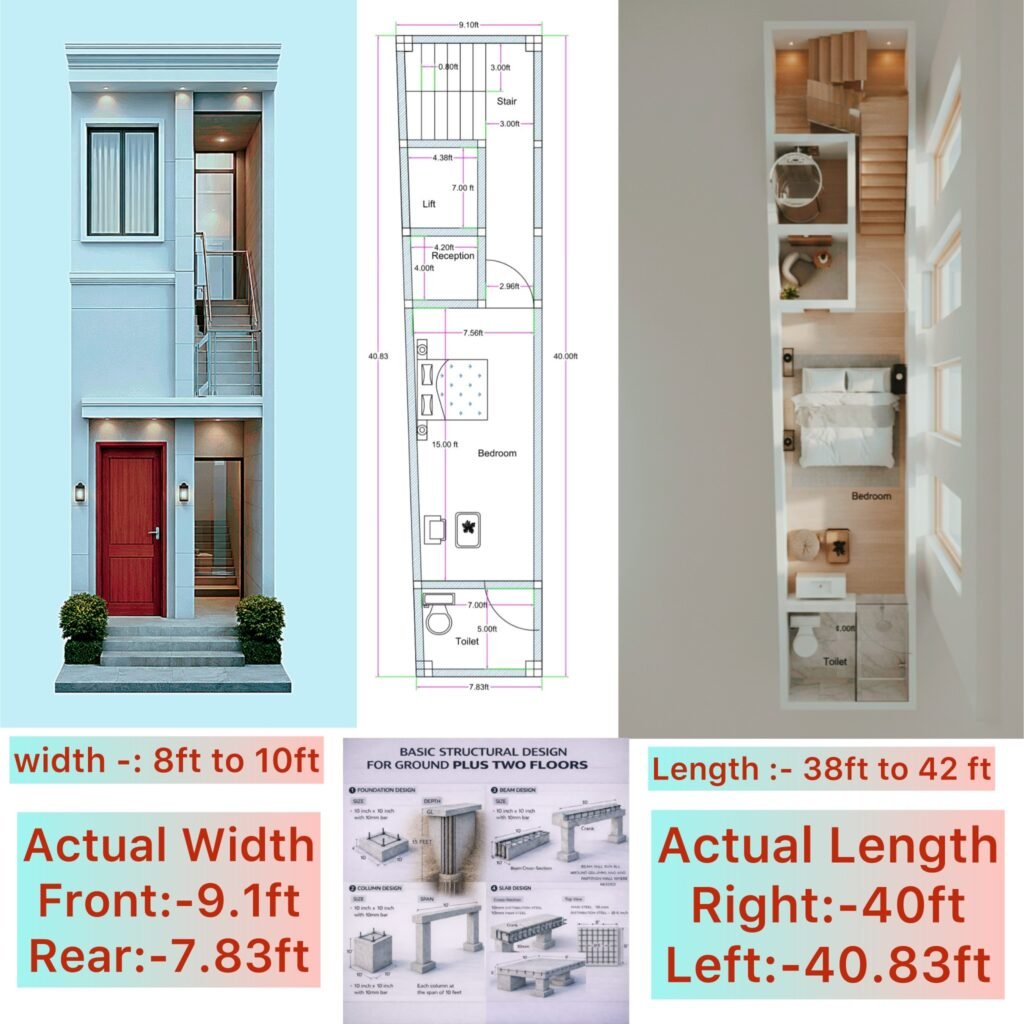

Buildingo A Complete Civil Engineering & Structural Analysis Guide
Introduction: The Challenge of Ultra-Narrow Urban Plots
Urban India is rapidly densifying. Land parcels are shrinking. Municipal bylaws, high land costs, and family divisions have created a new architectural challenge: plots with only 13 feet to 14 feet width.
Many homeowners believe:
- A 13-foot-wide plot is “too narrow”
- Ventilation will suffer
- Structure will become unsafe
- Planning will feel congested
From a civil engineering perspective — this assumption is incorrect.
With:
- Linear planning
- Controlled load path
- Proper column grid
- Intelligent stair positioning
- Vertical development strategy
- Structural integration
A 13–14 ft wide plot can comfortably accommodate:
- 1BHK
- 2BHK
- Rental units
- Mixed-use (shop + residence)
- Duplex system
- Parking + upper floors
In this blog, we will technically evaluate 4 real case studies:
- 13′ × 31′ (1BHK / Shop + Room Model)
- 13′ × 50′ (2BHK Linear Planning)
- 14′ × 17′ (Ultra-Compact 1BHK Module)
- 14.9′ × 26′ (15 × 25) G+1 Planning Model
We will analyze:
- Circulation efficiency
- Ventilation strategy
- Structural design system
- Load path logic
- Foundation type
- Slab thickness recommendation
- Construction cost estimation
- Practical rental potential
Common Structural System Used in All Narrow Plot Designs
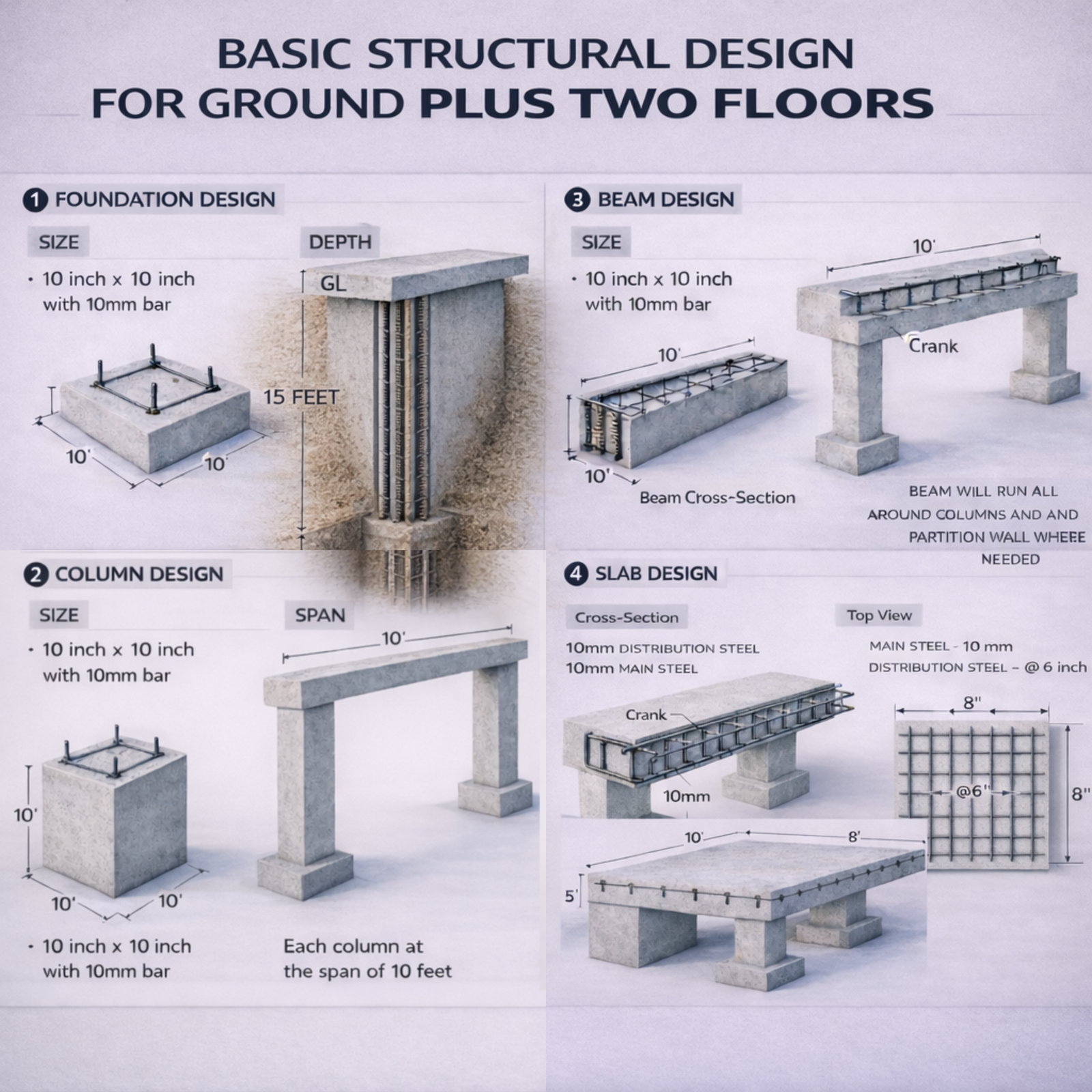
Before analyzing each case, let us understand the structural backbone.
1. Foundation System
All plots use:
- Pile-type foundation / deep column footing
- Depth: approx. 15 feet below ground level
- Diameter: 10”–12” depending on soil SBC
- Reinforcement: 8mm–12mm longitudinal bars
- M20–M25 concrete grade
Because narrow plots concentrate load in fewer columns, deeper foundation prevents differential settlement.
2. Column System
- Column size: 9”×9” or 10”×10”
- Steel: 4–6 main bars (12mm)
- Ties: 8mm @ 6” c/c
- Columns rise directly from pile
- Connected through Plinth Beam at ground level
3. Load Path
Load transfer follows:
Slab → Beam → Column → Pile → Soil
Loads considered:
- Dead Load (self-weight)
- Live Load (2–3 kN/m² residential)
- Wall Load
- Staircase Load
4. Slab Thickness
- 4 inches (100mm) for light residential
- 5 inches recommended for 2-storey
- M20 concrete minimum
5. Plinth & Roof Beam
All columns connected at:
- Plinth level
- Lintel level
- Roof beam level
This prevents lateral instability in narrow layouts.
CASE 1: 13’ × 31’ Plot (Actual Size: 13’ × 31’)
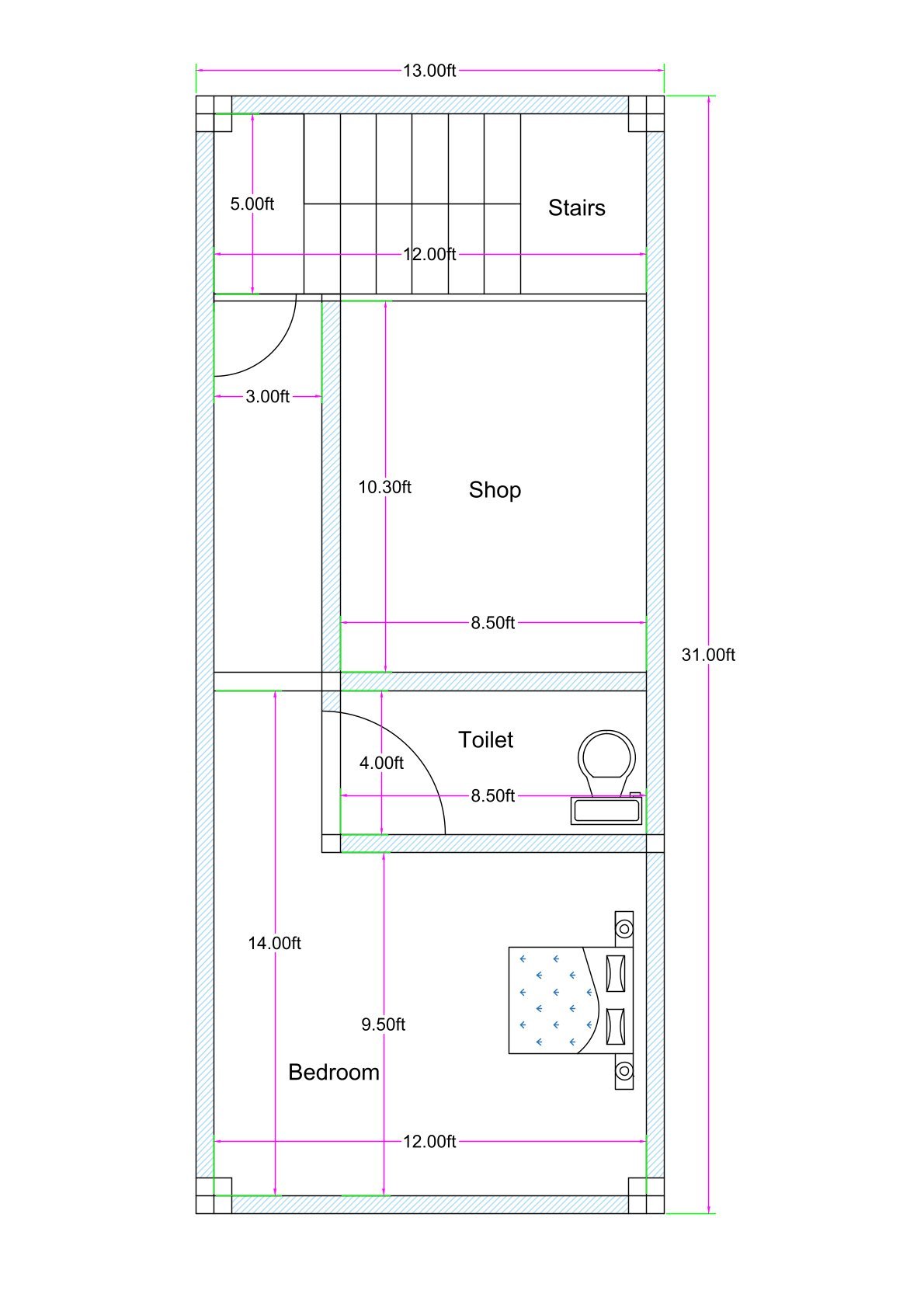
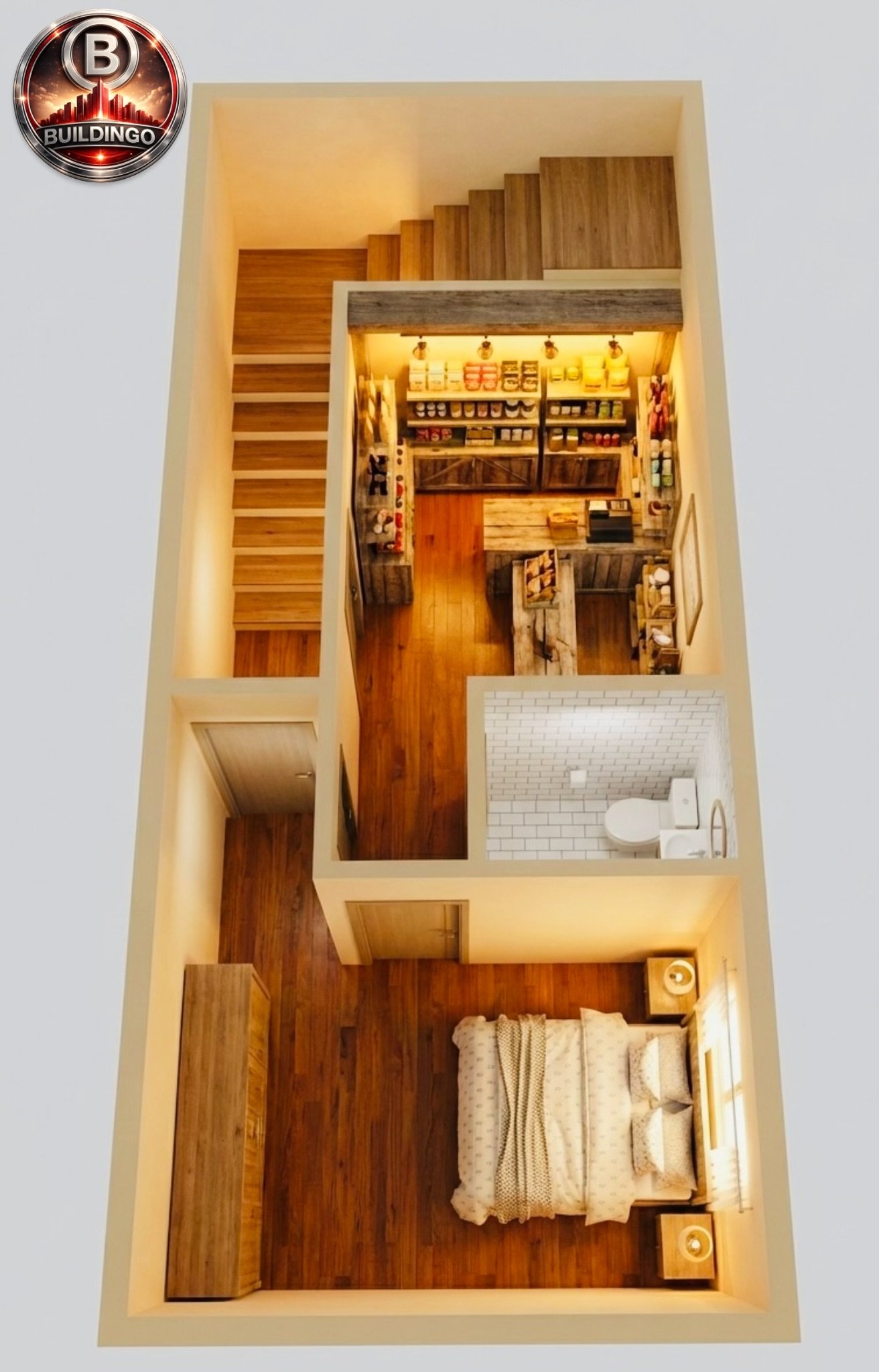
Planning Concept: Shop + 1 Bedroom Model
This is a linear mixed-use layout.
Front:
- Shop space (8.5 ft width approx.)
- Staircase on one side
Rear:
- Toilet
- Bedroom (approx. 9.5’ × 12’)

Technical Circulation Analysis
- Single-side circulation
- Linear movement reduces corridor wastage
- Stairs positioned along wall to avoid central blockage
Ventilation Strategy
- Rear window
- Front shop shutter opening
- Stair void allows vertical ventilation
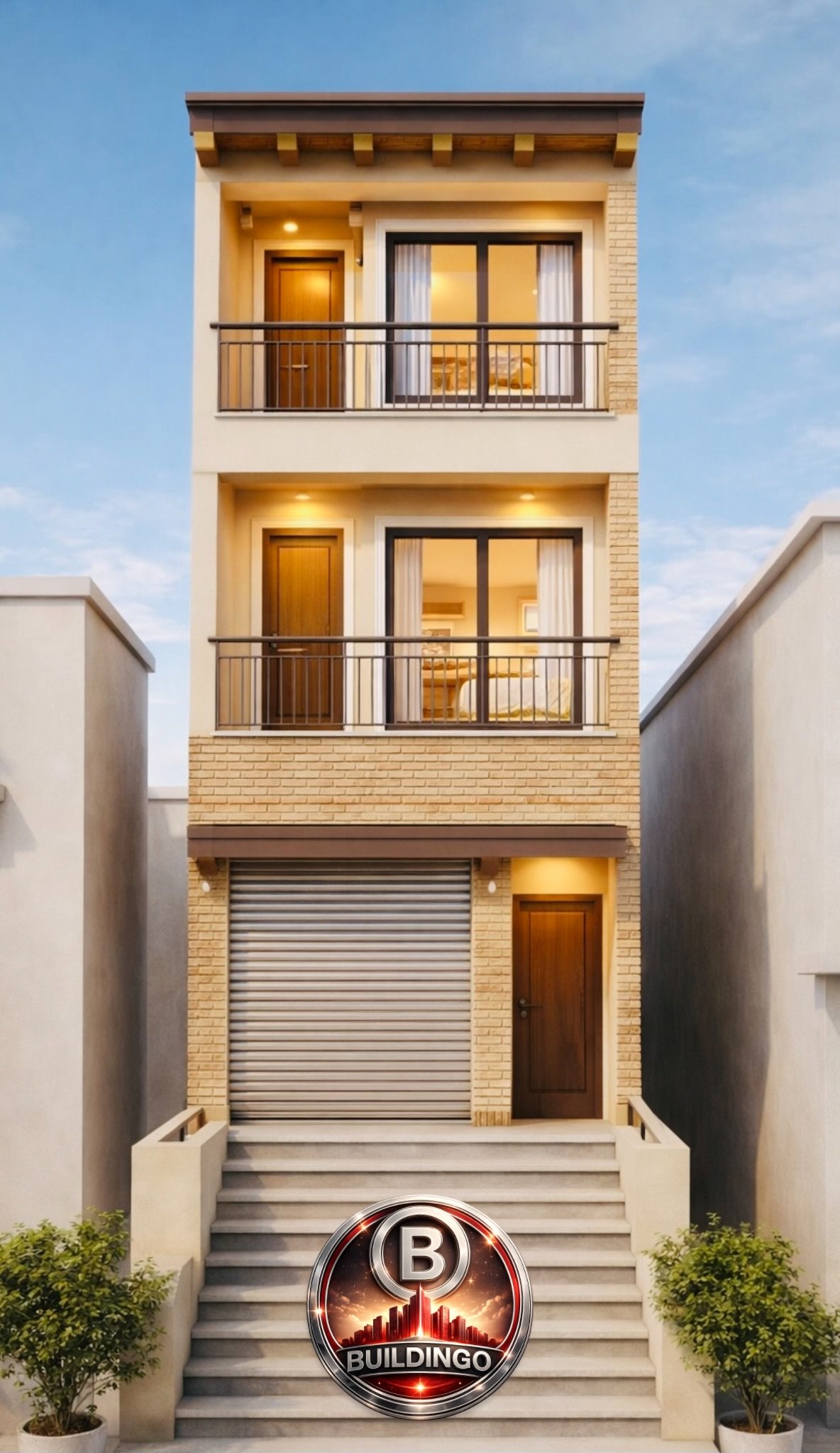
Estimated Construction Cost
Approx built-up: ~400 sq.ft.
India average (2026 mid-level finish):
₹1,600–₹2,000 per sq.ft.
Estimated cost:
₹6.5 – ₹8 lakh approx.

Rental Potential
- Ground shop rental
- Upper floor residential
- ROI high for market-side plots
CASE 2: 13’ × 50’ Plot (Actual Size: 13’ × 50’)
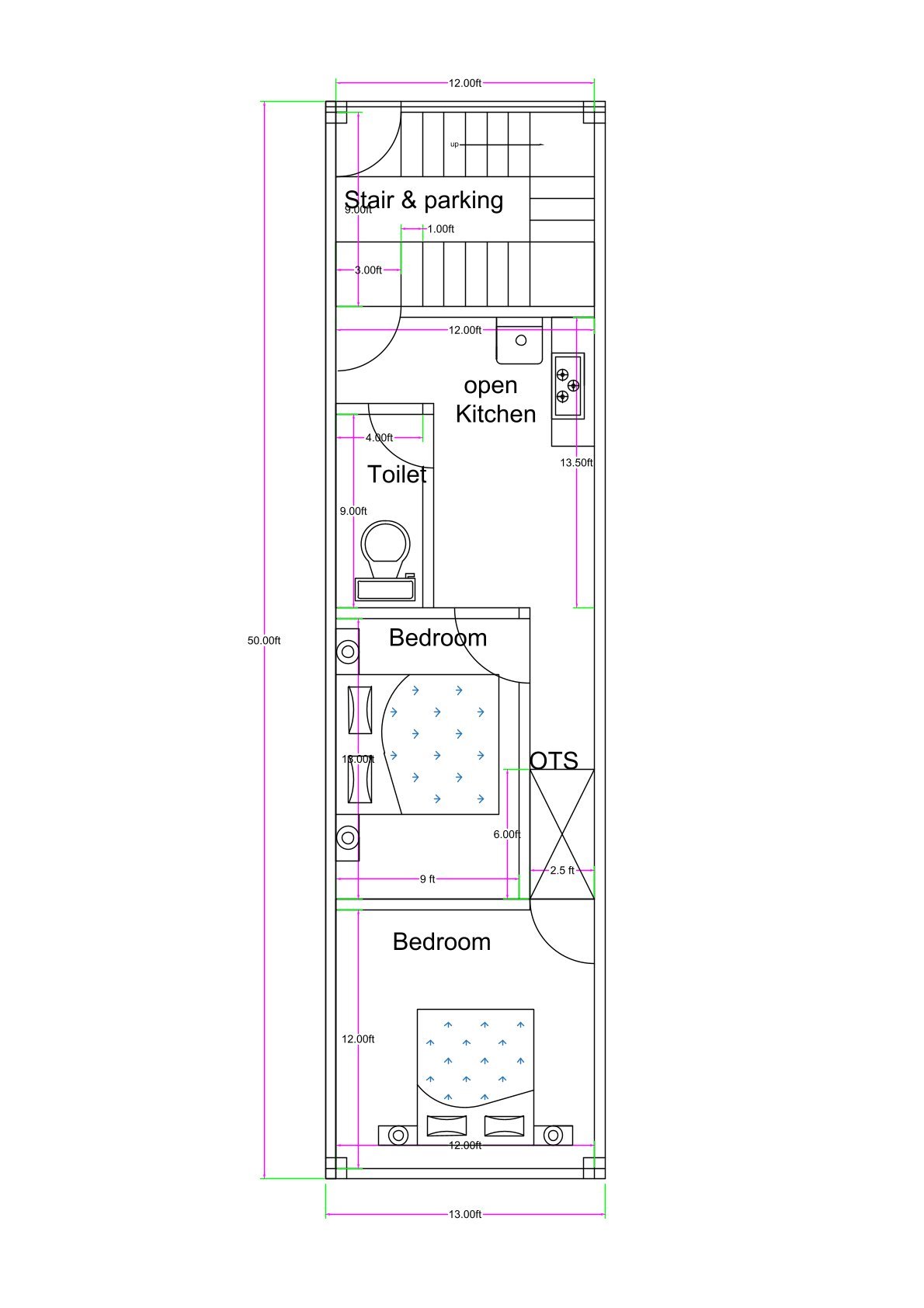
Planning Concept: Linear 2BHK
This is ideal for long rectangular plots.
Sequence:
- Stair + Parking
- Open Kitchen
- Toilet
- Bedroom
- Rear Bedroom
- OTS for ventilation
Engineering Logic
- Long span avoided
- Beams run across width
- Walls act as shear stabilizers


Ventilation Solution
- OTS (Open to Sky)
- Rear window
- Staircase vertical shaft
Narrow width is compensated by depth-based ventilation.

Construction Cost
Built-up approx: 650 sq.ft.
Cost range:
₹10 – ₹13 lakh approx.

CASE 3: 14’ × 17’ Ultra Compact Plot
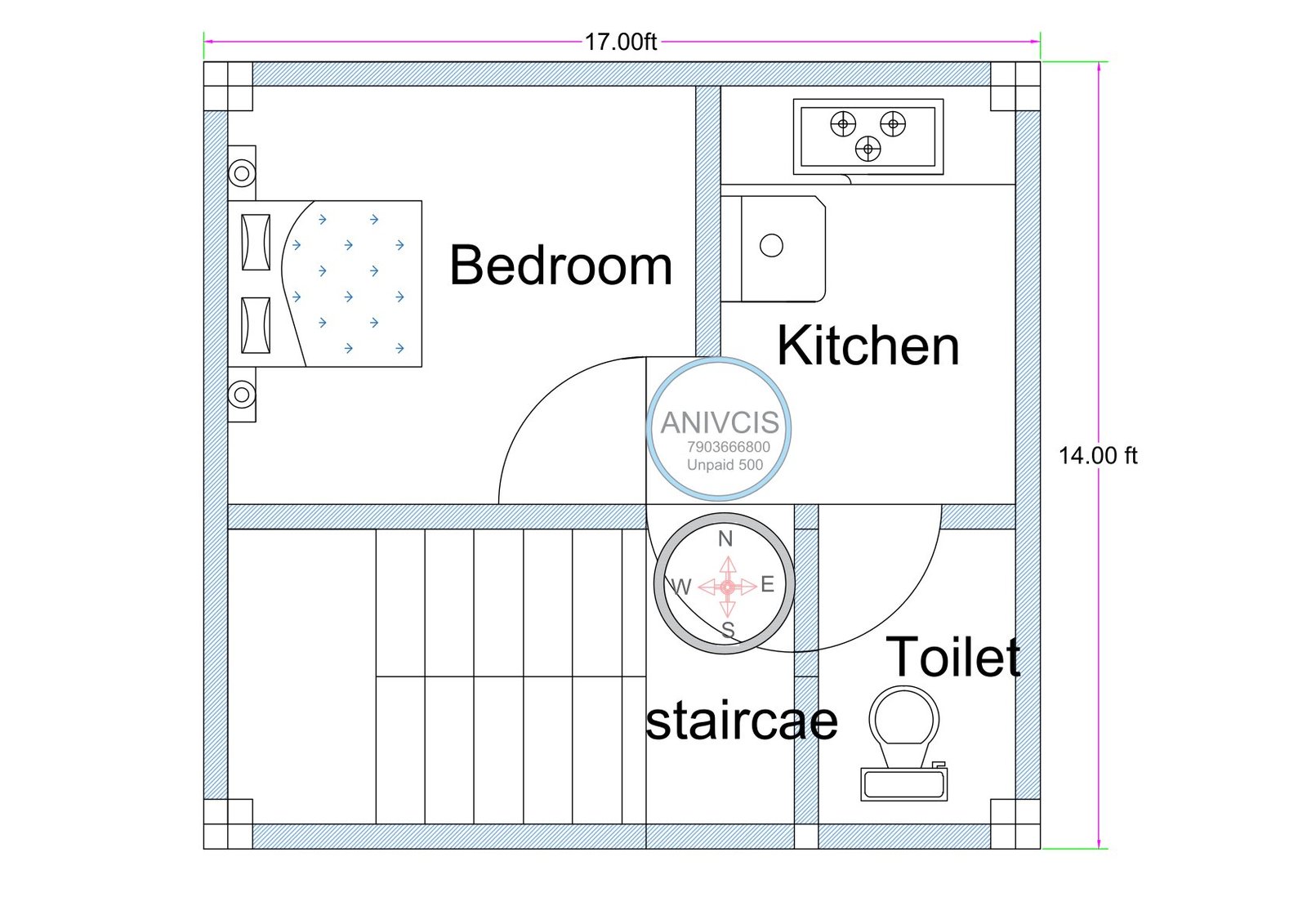
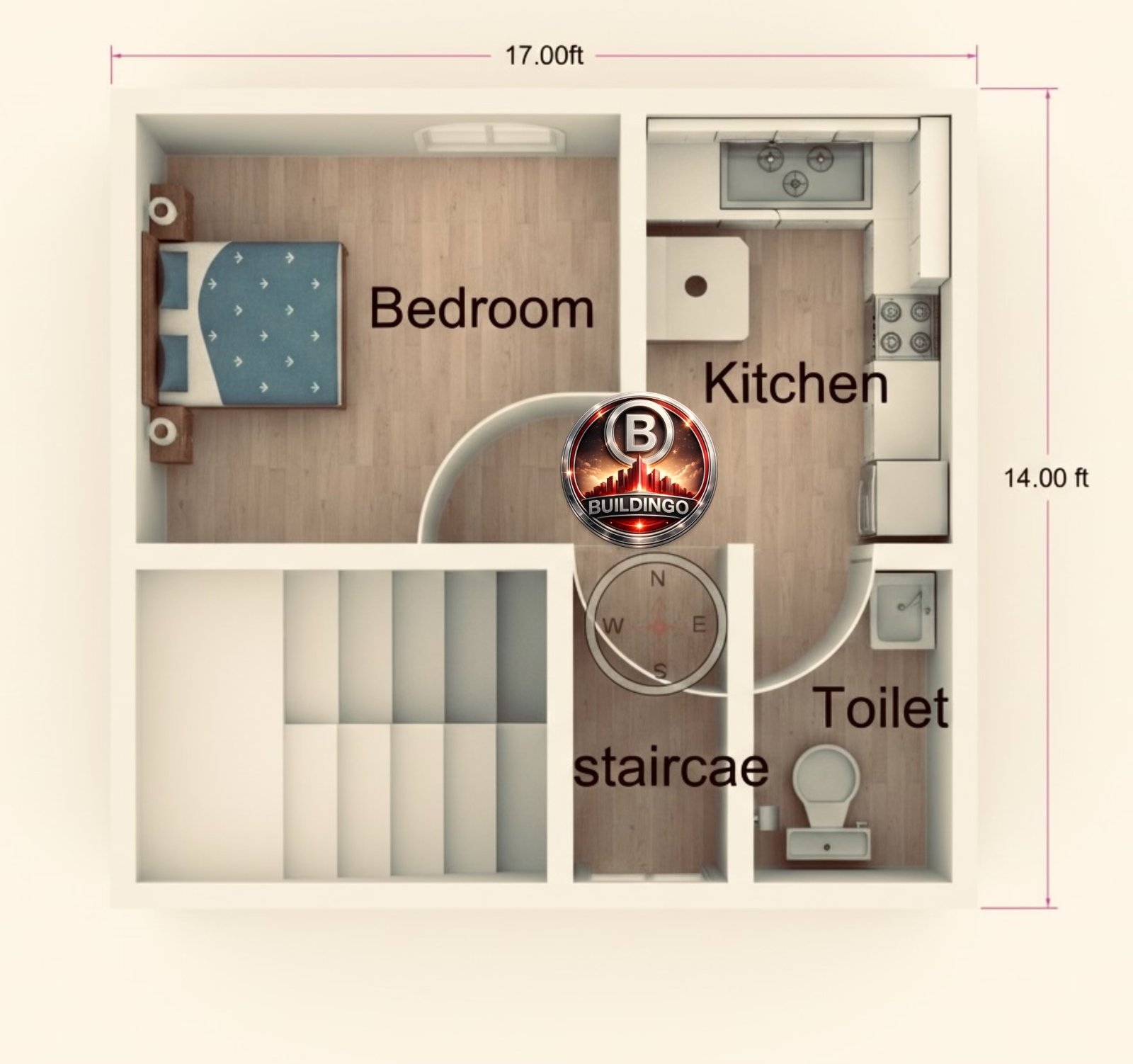
Planning Concept: Micro 1BHK
This is an urban micro-housing model.
Components:
- Staircase
- Bedroom
- Kitchen
- Toilet


Structural Advantage
Small footprint means:
- Less bending moment
- Smaller beam span
- Reduced slab stress
- Economical steel usage

Cost Estimation
Built-up: ~240 sq.ft.
₹4 – ₹5.5 lakh approx.
Perfect for:
- Rental
- Staff quarters
- PG conversion


CASE 4: 14.9’ × 26’ (Can Be Said 15×25)
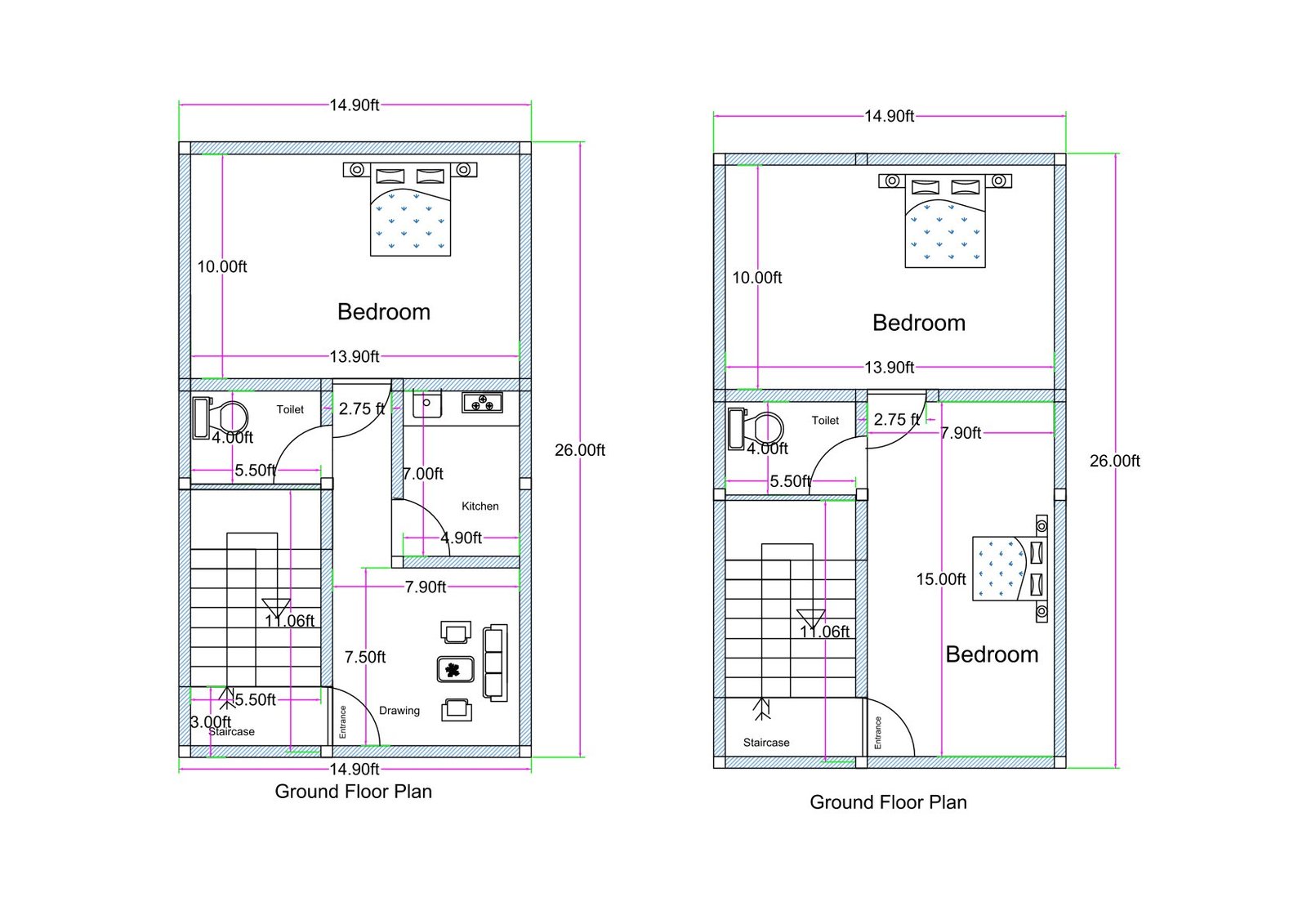
Planning Concept: G+1 Compact Family House
Ground Floor:
- Drawing
- Kitchen
- Bedroom
- Toilet
- Stair
First Floor:
- Two Bedrooms
- Toilet

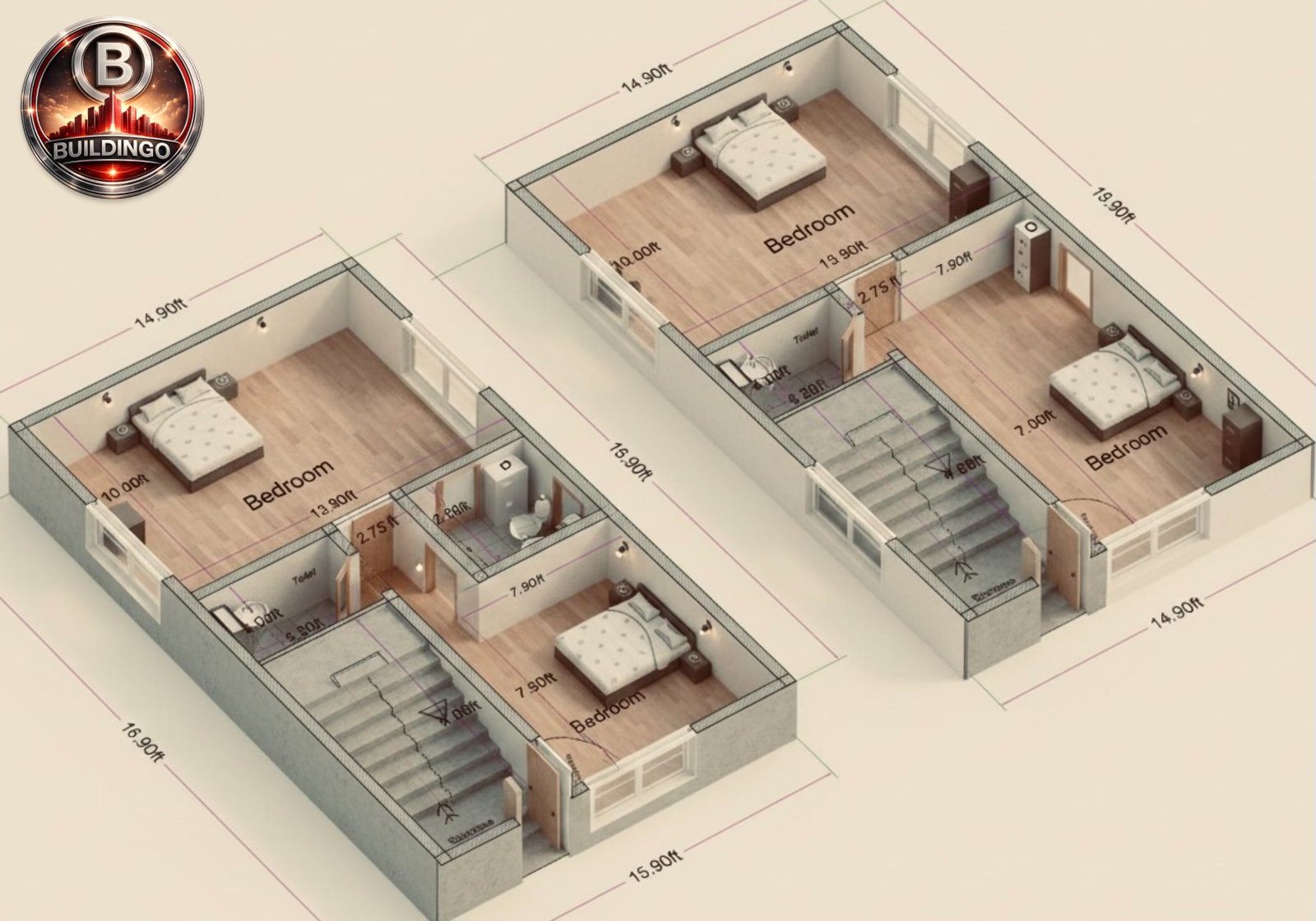
Structural Observation
This layout balances:
- Central staircase
- Symmetrical load distribution
- Equal beam spans

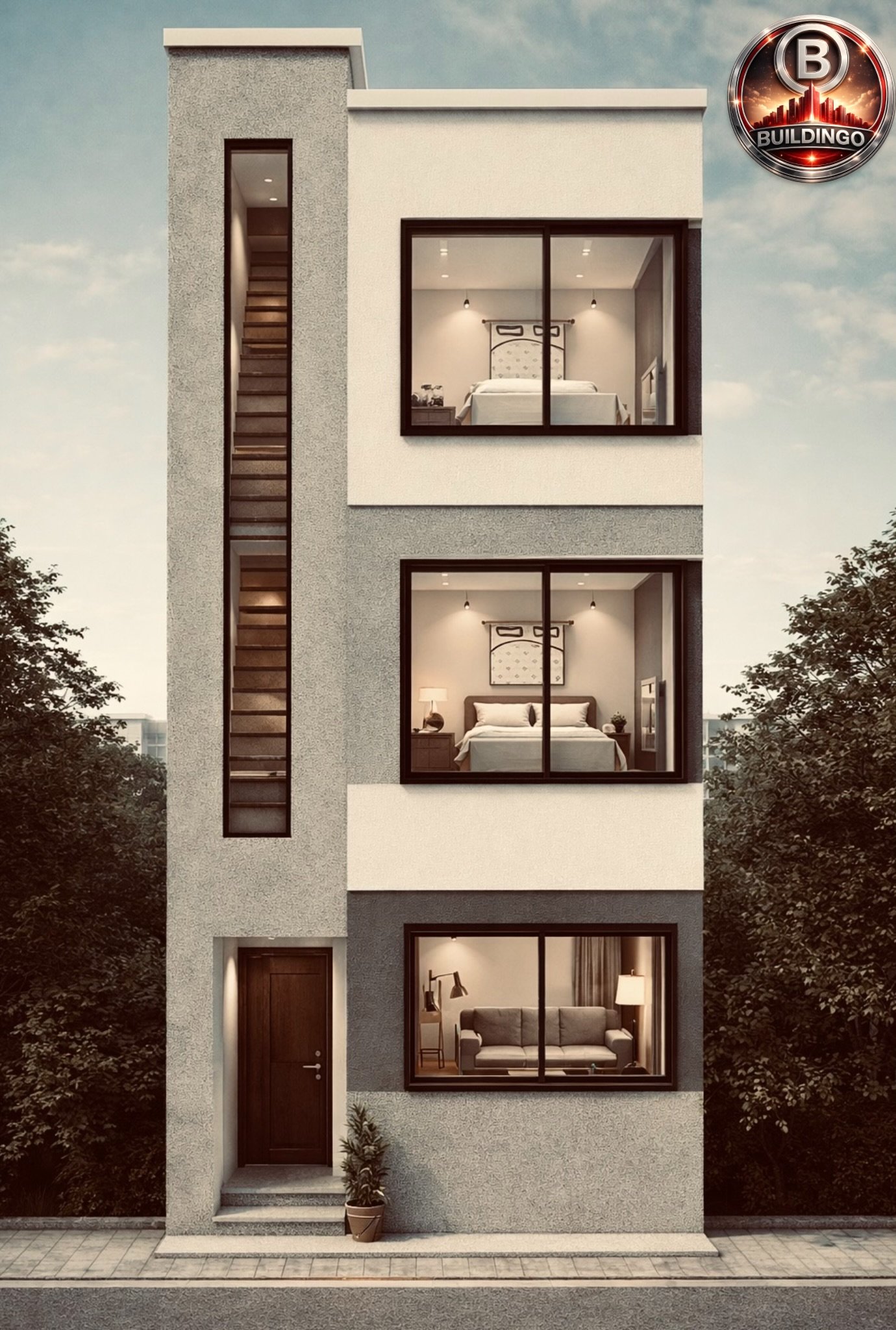
Cost Estimation
Ground + First:
~800 sq.ft.
₹13 – ₹16 lakh approx.
Engineering Conclusion: Why Narrow Plots Work
1. Linear Planning Reduces Wastage
2. Vertical Development Multiplies Space
3. Proper Column Grid Controls Structural Stress
4. Deep Foundation Handles Concentrated Load
5. OTS and Stair Voids Solve Ventilation
Narrow plots are not a limitation —
They are a design discipline challenge.
About Buildingo Platform

Buildingo is working toward:
- Affordable design accessibility
- Structured civil-engineering-backed plans
- 2D + 3D + structural concept bundle
- Budget-friendly combo packs
Instead of hiring multiple consultants, users can access optimized narrow-plot designs starting at ₹99 combo packages.
Final Verdict
Yes —
A 13 to 14 feet narrow plot can absolutely become a comfortable, structurally sound, ventilated and rentable house.
With:
- Proper structural backbone
- Intelligent circulation
- Load path understanding
- Ventilation planning
- Vertical development
Narrow plots become profitable assets.
👉 इस लेख का विस्तृत हिंदी विश्लेषण पढ़ने के लिए यहाँ क्लिक करें।
(वास्तु अनुसार दिशा-निर्देशन, कम चौड़ाई वाले प्लॉट की तकनीकी योजना, संरचनात्मक डिज़ाइन और विस्तृत व्याख्या सहित)