Buildingo
Ground + Two Floor Concept with Flexible 1BHK Layout Options
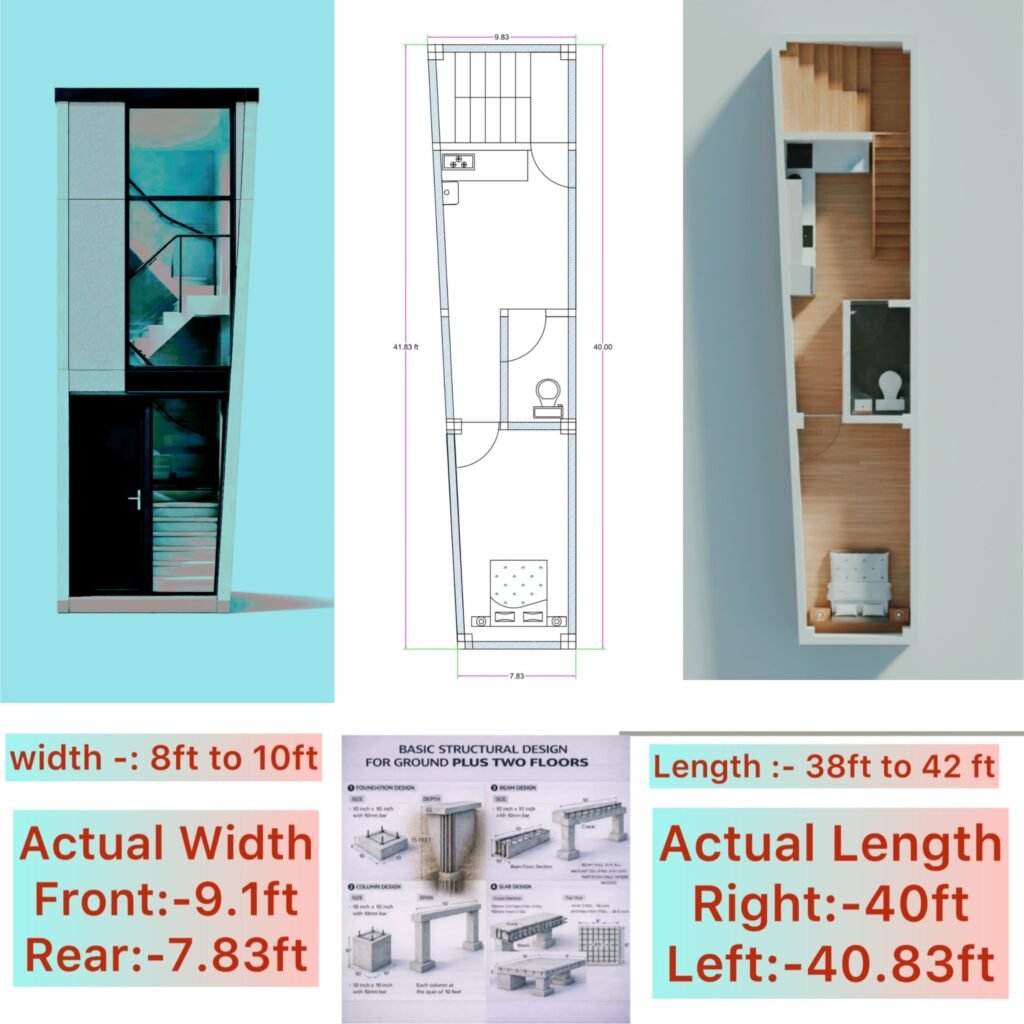
Designing on a 9.1 ft front plot that reduces to 7.83 ft at the rear and stretches roughly 40 ft deep (40 ft one side and 40.83 ft on the other) is not a drafting exercise — it is a space management challenge.
This project brings together two different layout approaches developed on the same trapezoidal plot geometry. Instead of treating them as separate ideas, this blog presents them as part of a single expandable residential concept.
The structure is designed once. The planning inside can evolve floor by floor.
All 10 drawings — 2D plans, 3D floor views, elevation concepts, structural framework, and combo sheets — are part of this complete vision.
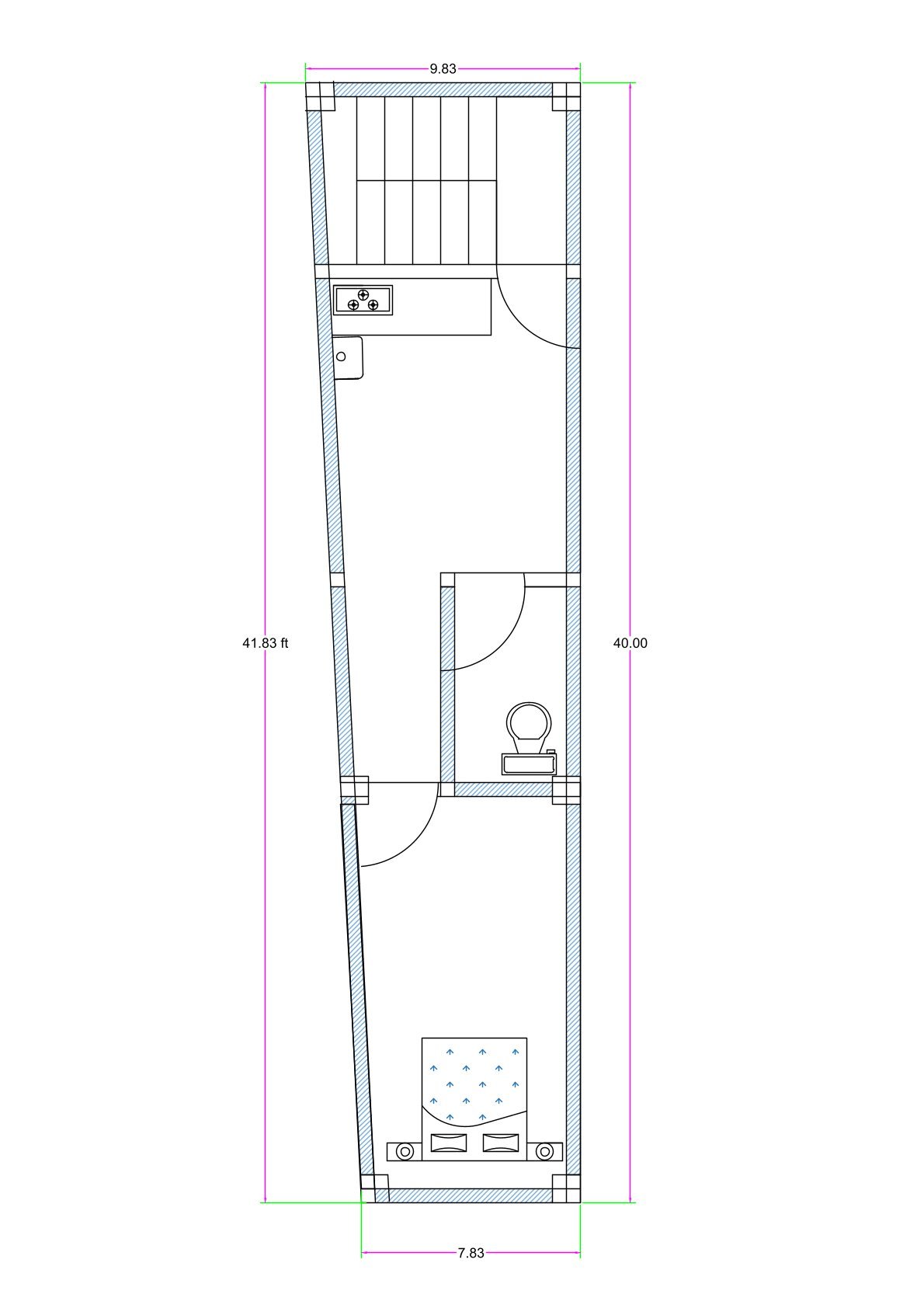
Detailed 1BHK Ground Floor Layout{Link}
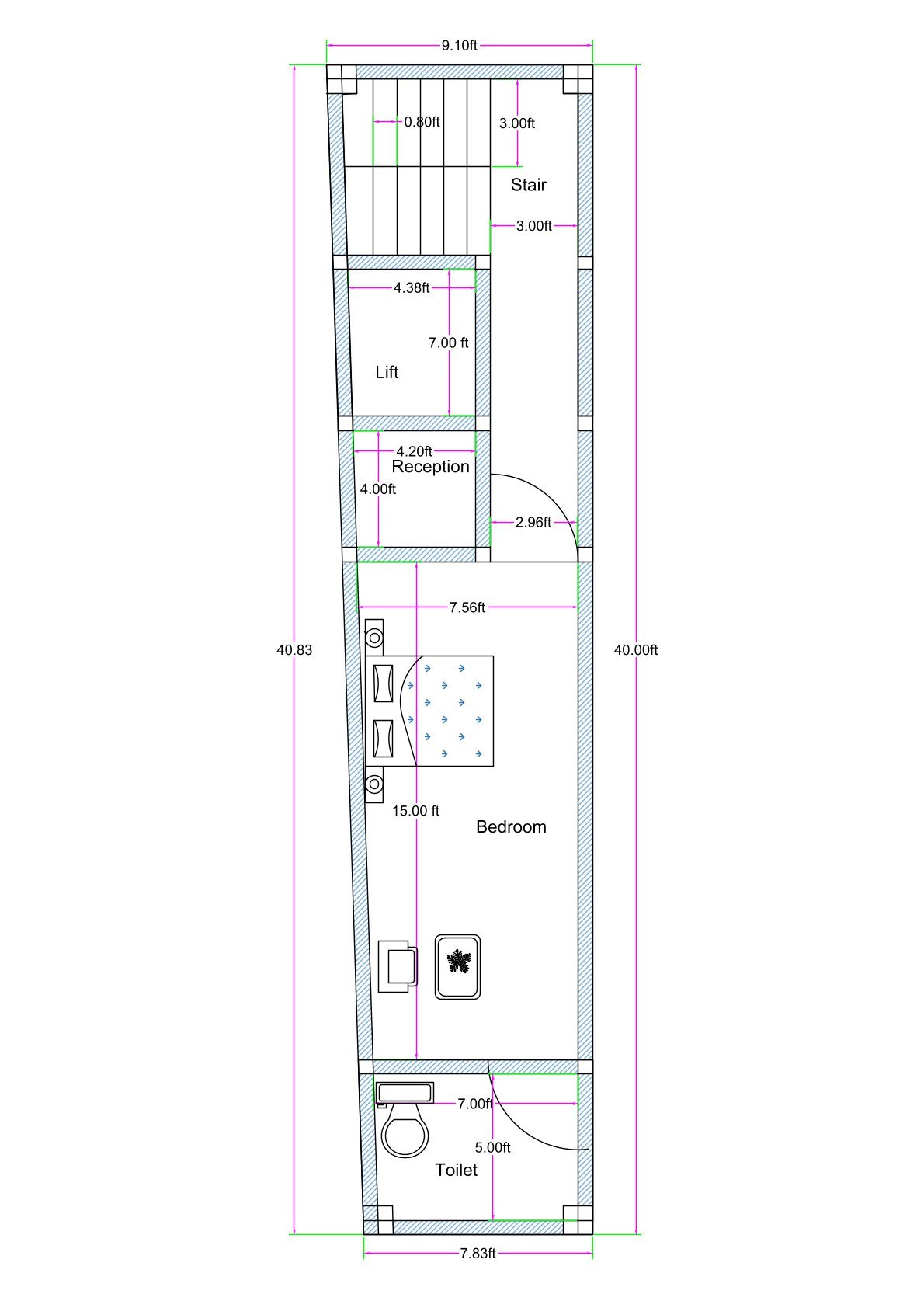
Alternate Compact Layout Version{Link}
Understanding the Plot Before Designing Anything
Let’s start with the actual land.
- Front Width: 9.1 ft
- Rear Width: 7.83 ft
- Depth (Right): 40 ft
- Depth (Left): 40.83 ft
So this is not rectangular. It narrows gradually toward the back.
That taper affects:
- Wall alignment
- Beam placement
- Column grid
- Room proportion
- Circulation planning
If you ignore the taper, the internal rooms will look awkward. If you respect it, the design flows naturally.
This project respects the plot lines.
The Concept: One Structure, Flexible Floor Planning
Instead of fixing one rigid plan for all floors, this project allows flexibility.
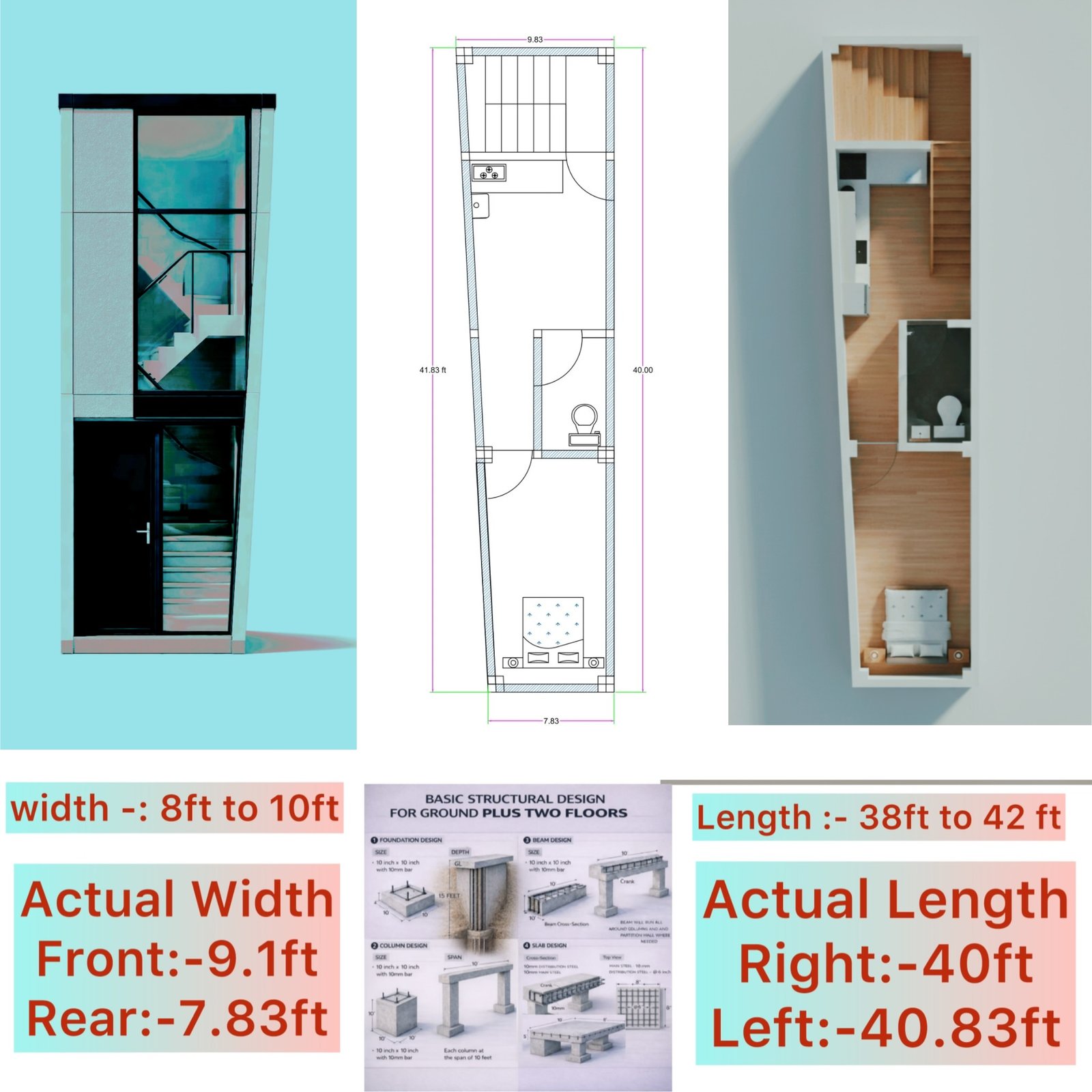
Ground Floor Concept:
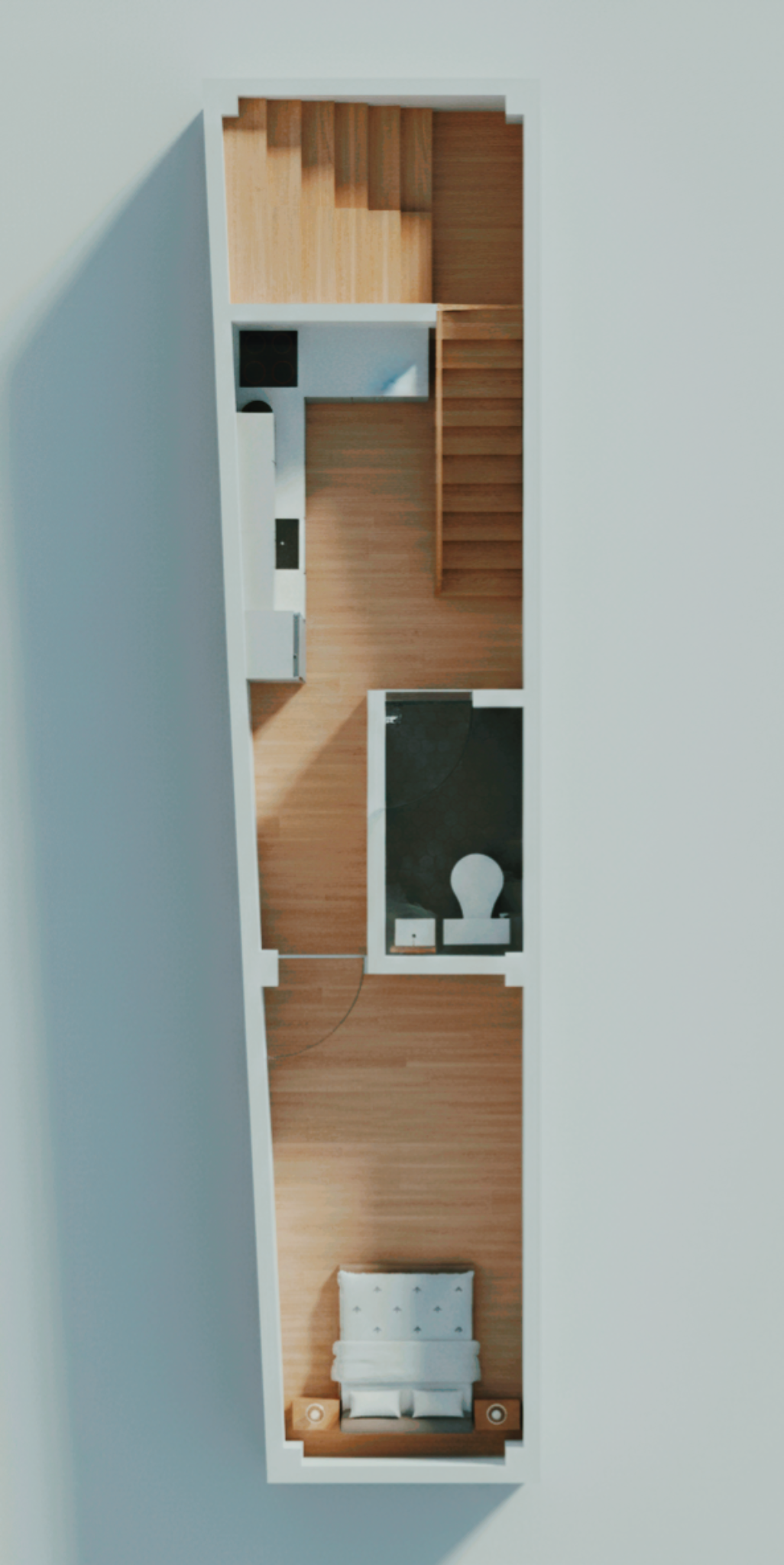
Compact 1BHK with Hall, Kitchen, Toilet, Bedroom and Staircase.
First Floor Concept:
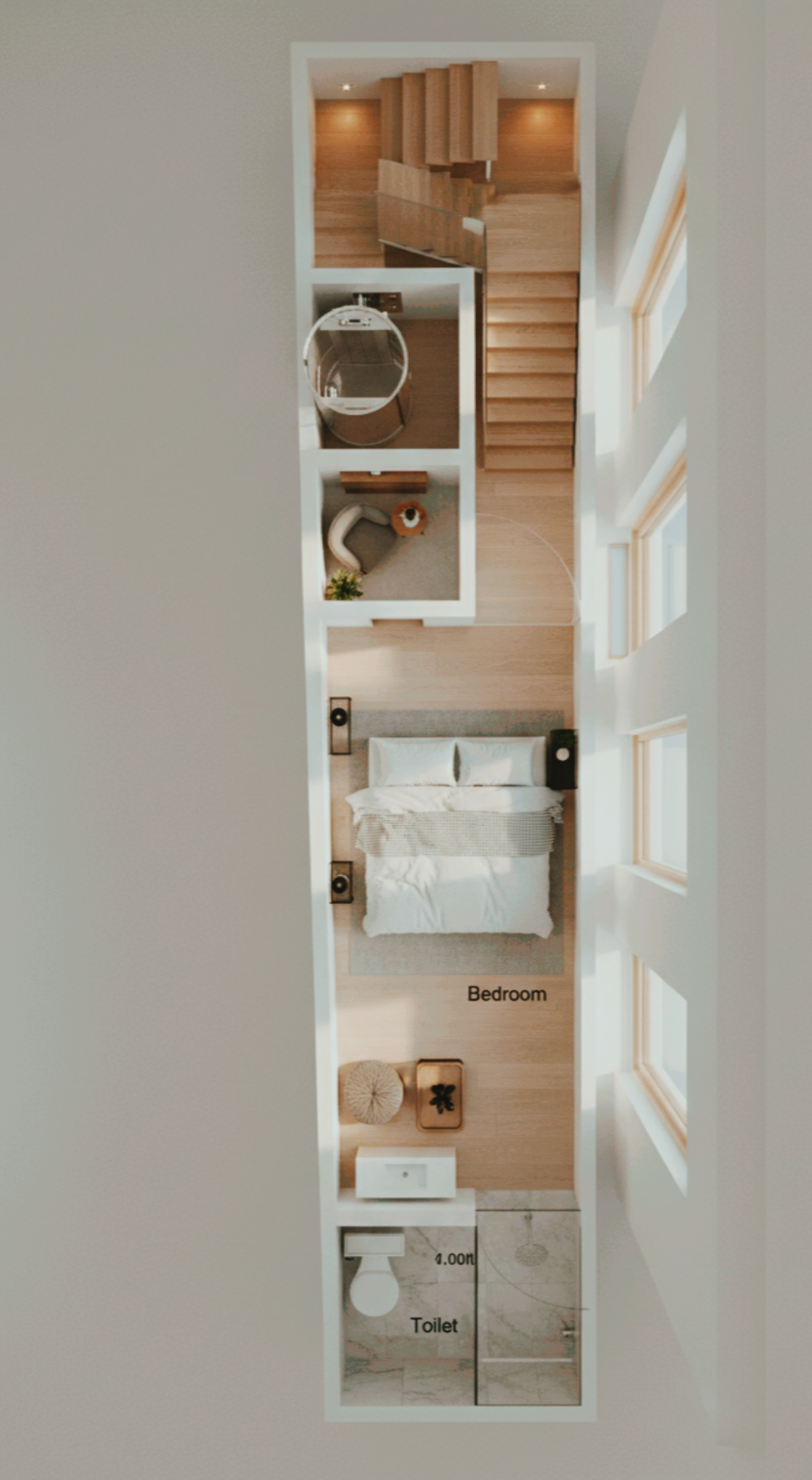
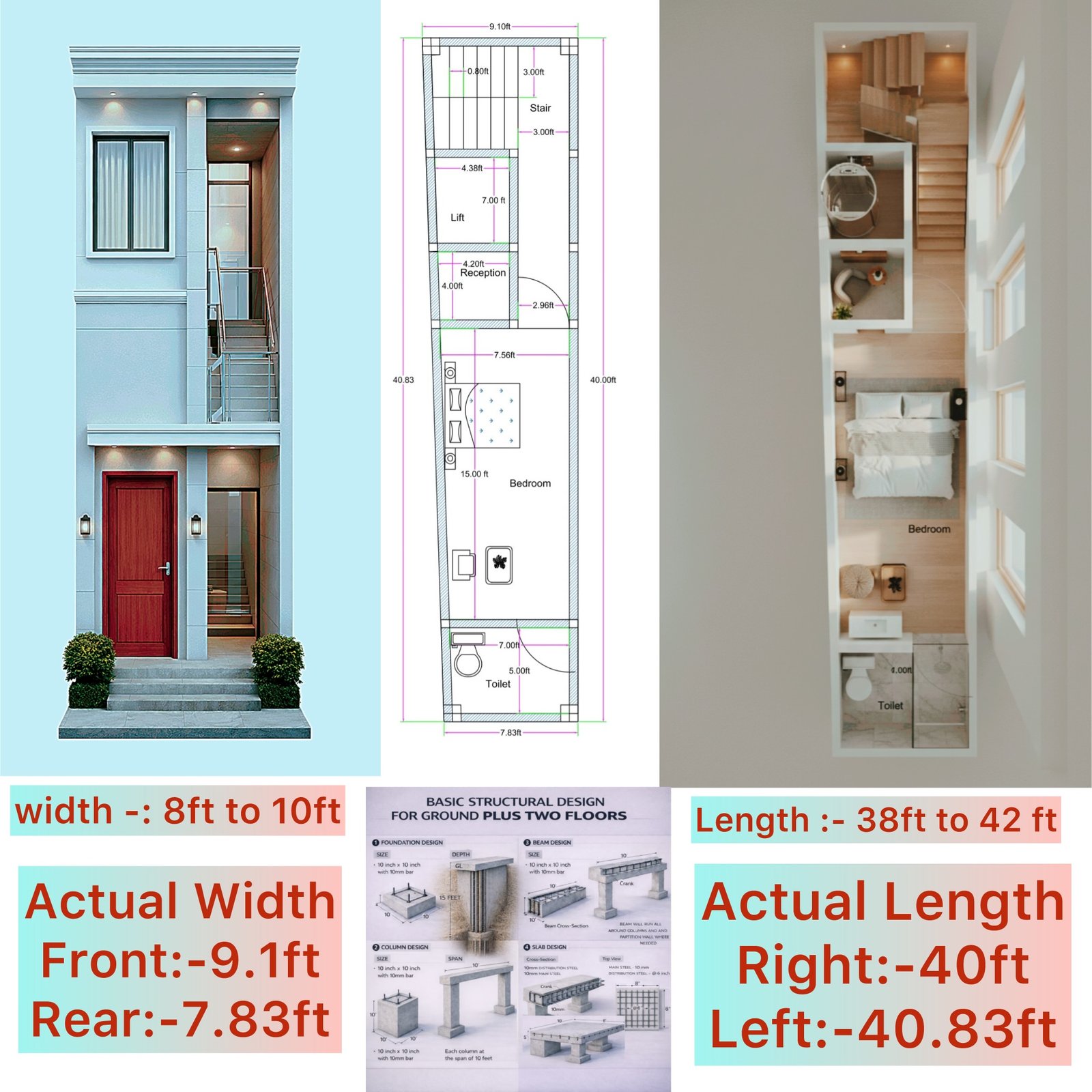
Alternative 1BHK with Reception-style front space, Lift provision, and private rear bedroom.
Both are possible because the structural grid is consistent.
This is not two different houses. It is one expandable house.
Ground Floor Planning (Practical Living Layout)
The ground floor follows a very practical arrangement.
Entrance and Hall (Approx. 15 ft x 8 ft usable zone)
The entrance is placed at the wider 9.1 ft front. That makes sense. You don’t want entry in the narrow 7.83 ft zone.
Once inside, there is an open hall.
This hall serves:
- Living area
- Sitting space
- Possibly dining corner
In a narrow house, keeping the front open makes the house feel bigger than it actually is.
Furniture needs to stay against walls. Center should remain free.
Kitchen Zone
The kitchen is positioned along one wall, generally in the middle portion of the 40 ft depth.
A straight counter works better here than an L-shaped one.
Reason?
Because turning corners eats space.
A single wall counter keeps movement simple and clean.
Toilet (Approx. 4 ft x 7 ft)
Placed strategically along one side wall.
Why side wall?
Because plumbing stacks vertically.
If upper floors are built, same toilet line can continue.
Wet areas must align vertically. That is basic planning discipline.
Rear Bedroom (Approx. 10–12 ft x 8 ft)
The bedroom sits toward the rear 7.83 ft width zone.
Even though rear is narrower, proper wall alignment keeps usable width functional.
Queen-size bed fits.
Storage must be wall-mounted.
No bulky wardrobes.
Rear placement gives privacy from road noise.
Staircase Block (Approx. 10 ft depth allocation)
Staircase is positioned near the front or mid-front zone.
It acts as:
- Circulation core
- Structural stabilizer
- Future expansion access
Even if upper floors are built later, staircase location does not disturb the ground layout.
First Floor Concept (Alternate Layout Approach)
Now here is where design becomes interesting.
Instead of copying ground floor, first floor can adopt the second drawing concept.
This version includes:
- Reception-type front area
- Lift provision zone
- Central passage
- Bedroom at rear
- Attached toilet
This layout is slightly more formal.
It can work as:
- Rental unit
- Office-use floor
- Small clinic
- Studio workspace
So same building, different use.
That’s smart planning.
Lift Provision Option
Even in 9.1 ft frontage, a small lift shaft provision can be integrated near staircase.
Even if lift is not installed immediately, that space can function as:
- Ventilation duct
- Utility shaft
- Storage cavity
Future-proofing matters.
You should not design only for today.
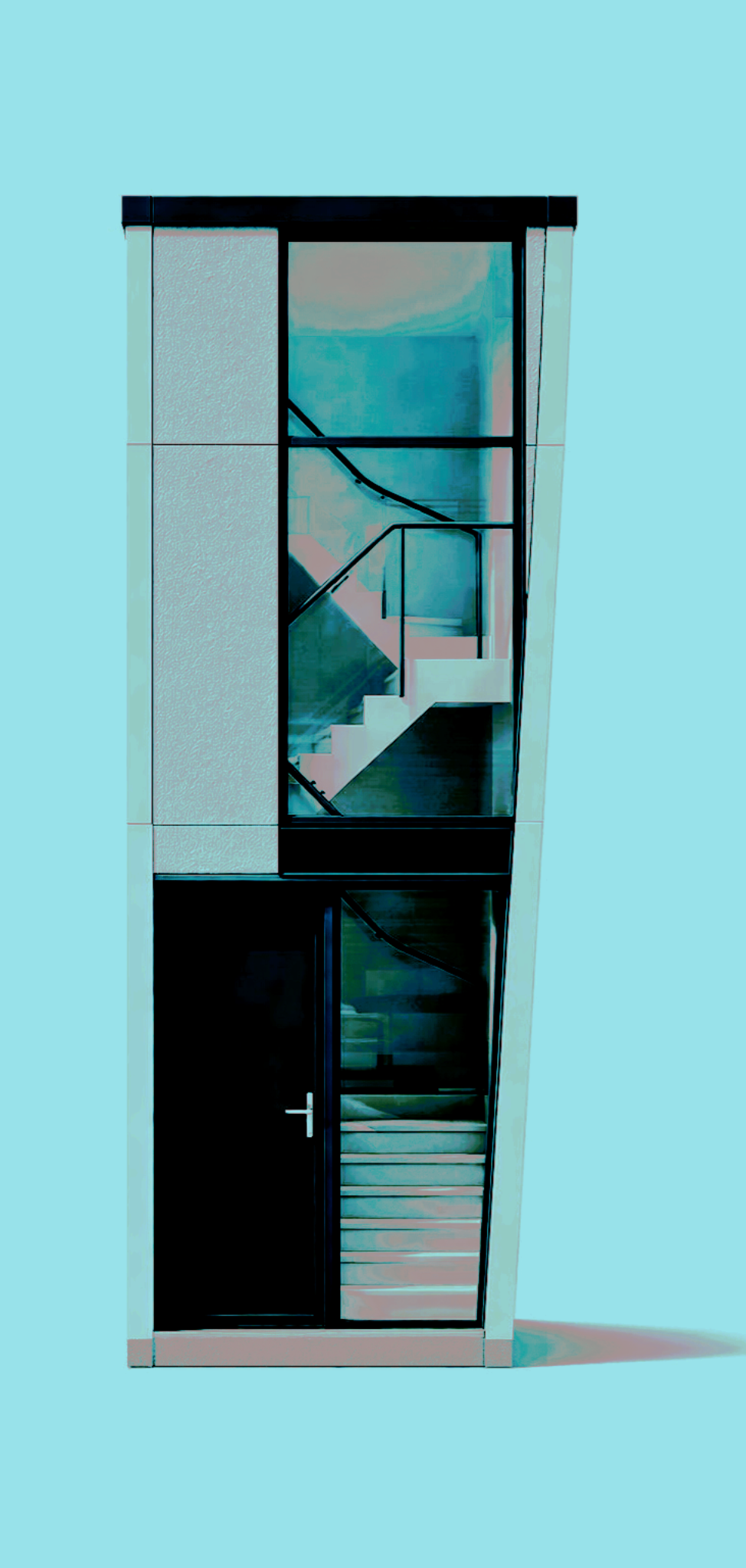
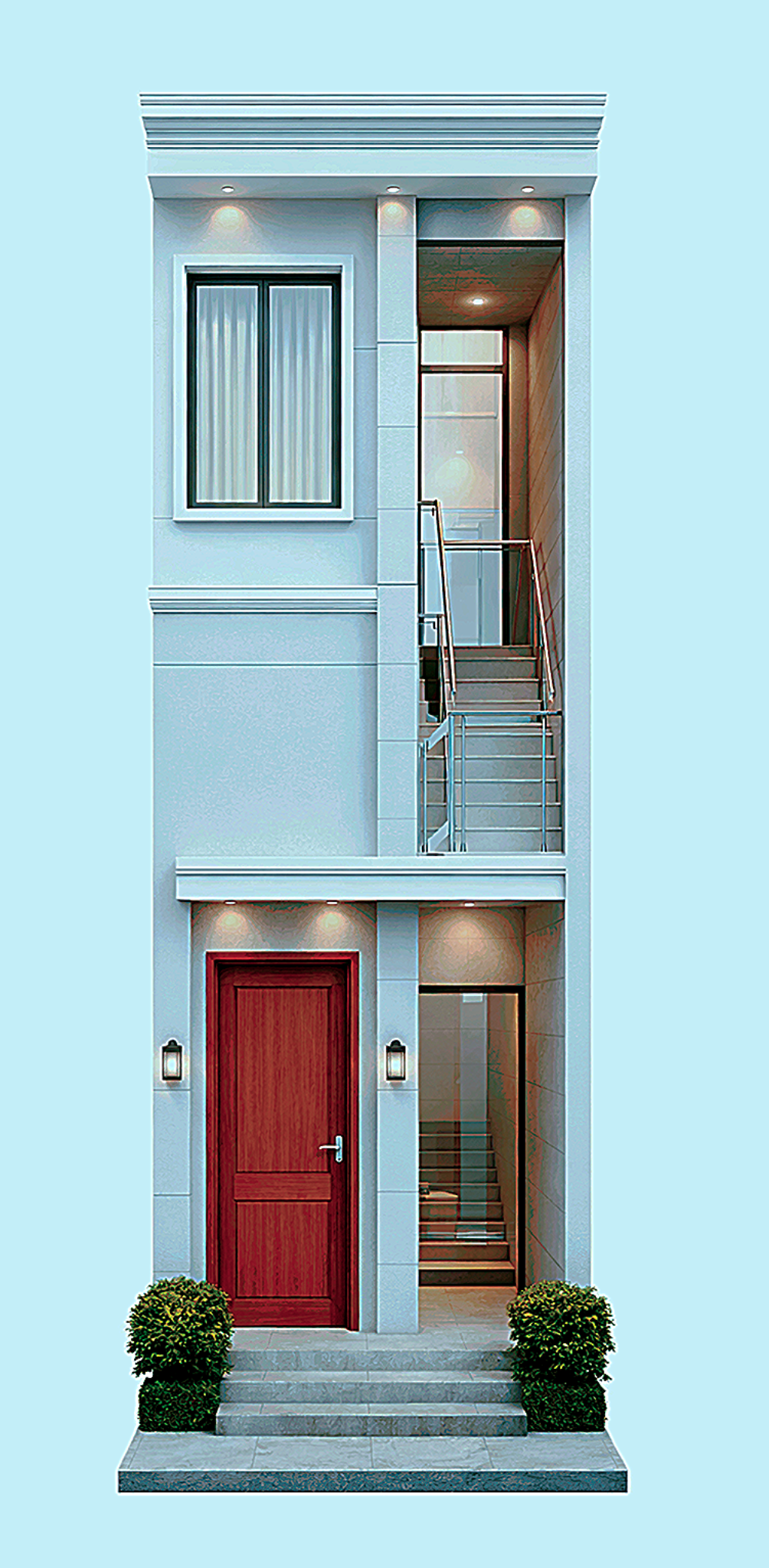
Elevation Strategy
Since the frontage is only 9.1 ft, horizontal design elements make building look compressed.
So vertical emphasis is used.
- Vertical glass panel near staircase
- Clean rectangular frame
- Minimal projections
- Balanced facade depth
One floor elevation can follow Design A (modern glazed front).
Upper floor can slightly vary material tone for distinction.
But structure remains aligned.
No unnecessary cantilevers.
In narrow plots, heavy projections create structural complications.
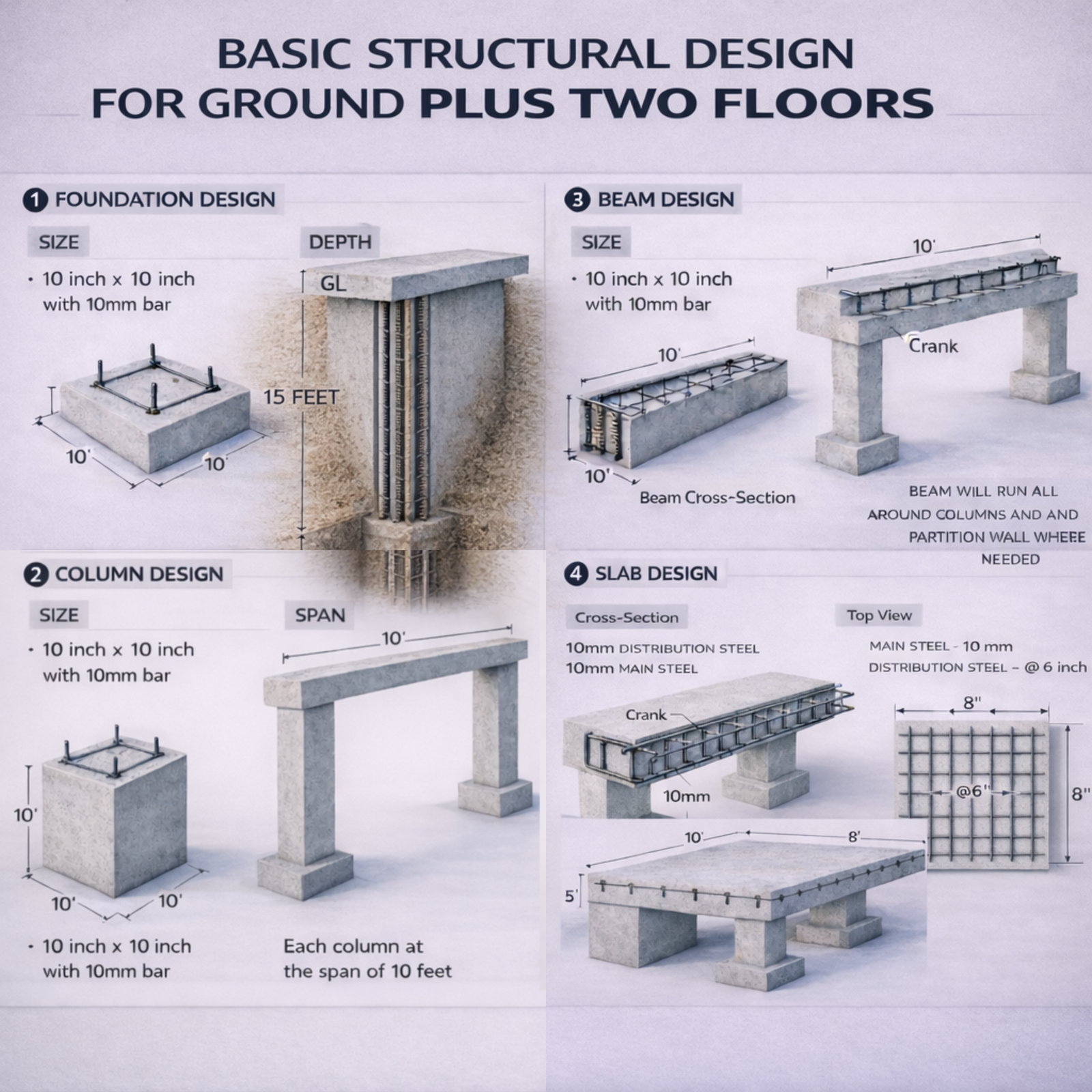
Structural Design – Foundation to Slab (Future G+2 Ready)
Now the backbone.
Even if you build only ground floor today, structure is prepared for Ground + Two.
Foundation
- 10 inch x 10 inch column base
- Deep footing (pile-like behavior)
- Designed for concentrated narrow load transfer
Narrow plots mean columns are closer.
Load concentration becomes high.
Foundation must go deep enough to avoid differential settlement.
Columns
- 10” x 10” RCC columns
- 10 mm reinforcement bars
All columns align vertically.
No offsets.
Offset columns in narrow plots create eccentric loading. That is risky.
Beams
- 10” x 10” beams
- Continuous frame connection
Beams tie entire structure like a rigid box.
Staircase beams are carefully integrated.
Slab
- 4 to 5 inch thick slab
- 10 mm main steel
- 8 mm distribution steel
Span is short because width is small.
That makes slab structurally efficient.
Partition Walls
- 5 inch thick
Reduces dead load.
Keeps usable area slightly better.
Load Flow Understanding
Load path in this structure:
Slab → Beam → Column → Foundation → Soil.
Simple and direct.
Because plan is linear, torsion effect is minimal.
No irregular structural jumps.
Ventilation Strategy
Biggest problem in narrow plots is air.
Side windows are usually blocked by adjacent buildings.
So ventilation is achieved through:
- Front opening
- Staircase glazing
- Vertical duct (if lift shaft not used)
- Rear small opening
Even skylight above staircase can dramatically improve airflow.
Multi-Use Potential
This building concept supports:
- Small family residence
- Rental income floor
- Mixed use residential + office
- Gradual vertical expansion
Ground floor can remain personal use.
Upper floors can be rented.
That financial logic is practical in urban India.
Why Combining Both Layout Ideas Makes Sense
Instead of choosing between two designs, using them floor-wise increases value.
Ground Floor → Open 1BHK practical living
First Floor → Reception-based 1BHK (formal use)
Second Floor → Either repeat or modify
Structural grid allows flexibility.
That’s the strength.
Working With a Trapezoidal Plot, Not Against It
Many people think trapezoidal plots are bad.
Actually, they require intelligent planning.
Front wider → good for entry
Rear narrower → good for bedroom privacy
Internal walls follow boundary shape subtly.
That avoids leftover triangular unusable spaces.
Final Thoughts
On a 9.1 ft front, 7.83 ft rear, 40 ft deep trapezoidal plot, you cannot waste space.
Every inch must justify its presence.
This combined project demonstrates:
- Structural discipline
- Flexible planning
- Vertical expandability
- Modern elevation treatment
- Efficient wet area stacking
- Logical load transfer
All 10 drawings together show not just a house, but a system.
One structure.
Multiple planning possibilities.
Expandable future.
Small frontage does not limit ambition.
It only demands better thinking.
And honestly, that is what good design is about.
Prefer reading in Hindi?
Read the complete Hindi version with Vastu explanation here → [Link]