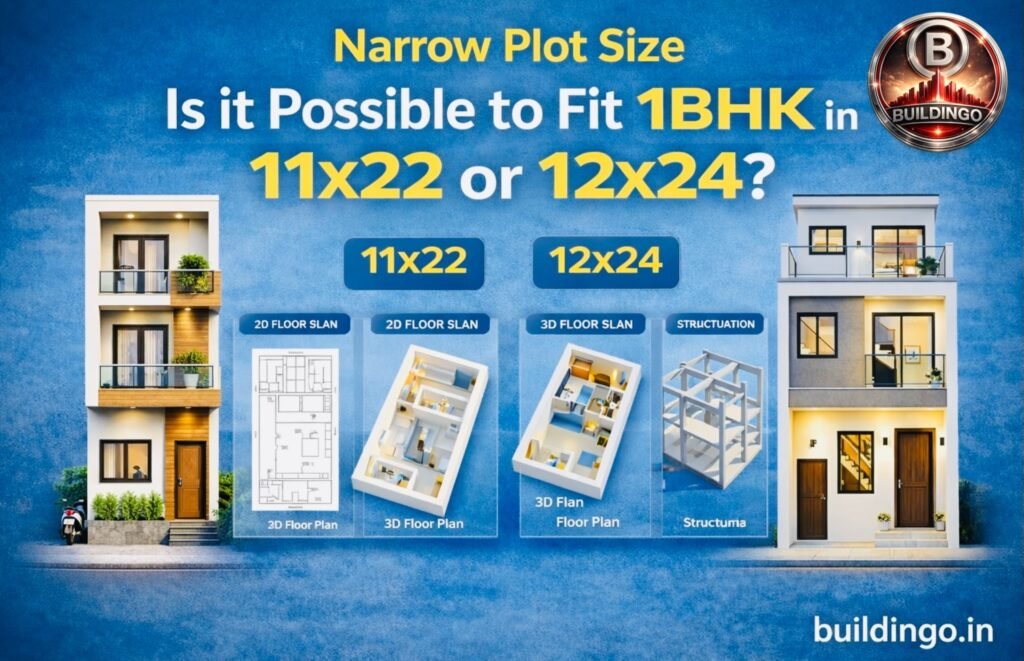
Buildingo Is 1BHK Possible in 11×22 & 12×24 Plots?
Complete Technical, Structural & Practical Analysis for Narrow Urban Houses
In today’s rapidly urbanizing India, compact plots such as 11×22 feet (242 sq.ft footprint) and 12×24 feet (288 sq.ft footprint) are increasingly common in tier-2 and tier-3 cities. The key question is:
Can a structurally safe, practical, and expandable 1BHK be built in such narrow rectangular plots?
The answer is yes — but only with smart structural planning and precise space optimization.
Let’s break down the technical and architectural logic behind these designs.
1️⃣ Technical Feasibility of 1BHK in 11×22 & 12×24 Plots
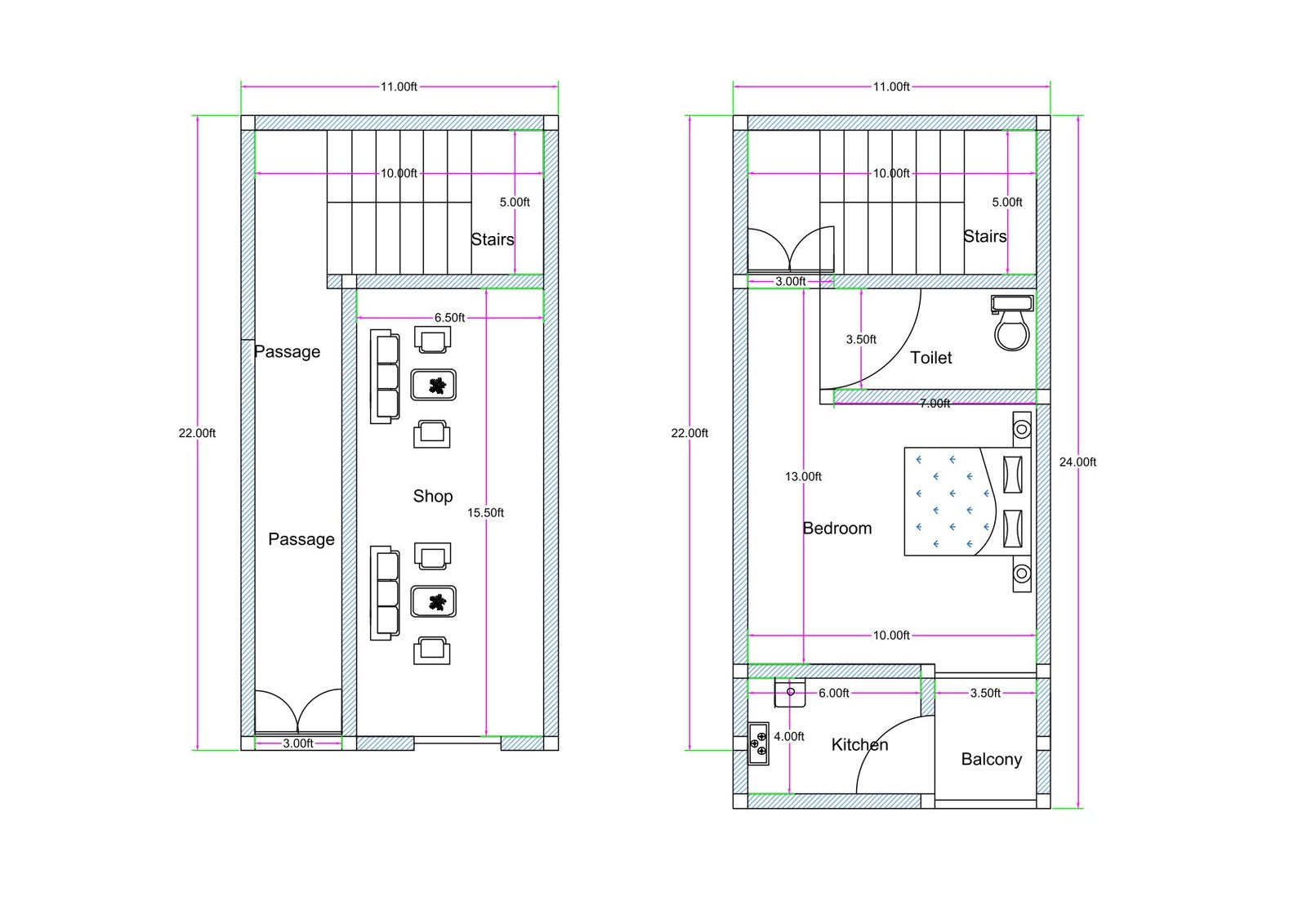
An 11×22 plot allows:
- Bedroom (approx. 10’×10’ or 10’×11’)
- Compact toilet (3.5’–4’ width)
- Linear kitchen (6’–7’ long counter)
- Small balcony (3’ projection)
- Staircase (5’ wide dogleg or straight flight)
A 12×24 plot offers slightly better movement space and ventilation buffer. The extra 1 foot width significantly improves:
- Furniture placement flexibility
- Staircase comfort
- Bathroom usability
- Structural column spacing
From a civil engineering perspective, both plots are feasible for G+2 construction, provided proper load transfer and column alignment are maintained.
2️⃣ Structural Logic & Column Grid Planning
For such narrow widths, structural grid planning becomes critical.
Ideal Column Layout:
- 4 main corner columns
- 1–2 intermediate columns along length
- 10 ft approximate beam span
In your 11×22 layout:
- Column size: 9”×12” or 10”×10” minimum
- Reinforcement: 10mm or 12mm bars (as per soil & load)
- Beam depth: 9”–12” depending on span
Because width is small (11 ft), beams usually span across width and transfer load to longitudinal beams, which then transfer to columns and finally to foundation.
Load Transfer Flow:
Slab → Beam → Column → Footing → Soil
If designed correctly, even a 242 sq.ft footprint can safely handle G+2 load.
3️⃣ Beam Spans & Slab Design
For 11 ft width:
- Clear span after wall thickness ≈ 9.5–10 ft
- 10 ft span is structurally manageable
- Slab thickness: 4.5”–5” (as per design)
- Distribution steel: 8mm–10mm
- Main steel: 10mm–12mm
In 12×24 plot:
- 11 ft internal span is comfortable
- Slightly better deflection control
- Lower vibration risk
Because the spans are short, structural safety remains strong if RCC is properly executed.
4️⃣ Stair Placement Logic
In compact urban houses, staircase planning defines the success of the layout.
In your 11×22 plan:
- Stair placed near entrance
- Allows independent access to upper floors
- Ideal for rental model
Advantages:
- Ground floor privacy maintained
- Vertical circulation optimized
- Future expandability ensured
Dogleg staircase works best:
- Requires approx. 5 ft width
- Fits in narrow plots efficiently
In 12×24 plot:
- Stair can be slightly shifted to improve ventilation shaft alignment
5️⃣ Ventilation Challenges in Narrow Plots
Major challenge in 11 ft wide homes:
- Cross ventilation is limited
- Side setbacks often unavailable
- Natural light penetration restricted
Solutions:
- Front balcony projection
- Larger front windows
- Stairwell ventilator window
- Exhaust ducts for toilet
- Skylight option above stair
Modern compact housing requires intelligent ventilation planning more than large area.
6️⃣ Urban Compact Housing Problems
In dense colonies:
- Plot sizes shrinking
- Rising land cost
- Parking constraints
- Shared walls
- Limited setbacks
Major problems:
- Heat retention
- Air circulation issues
- Privacy concerns
- Noise transmission
But compact housing also offers advantages:
- Lower construction cost
- Faster execution
- Rental income opportunity
- Vertical expansion flexibility
7️⃣ Modern Planning Solutions
Smart design principles applied in your layout:
✔ Open kitchen concept
✔ Minimal circulation waste
✔ Straight structural grid
✔ Balcony for light buffer
✔ Stackable toilet alignment for upper floors
✔ Stair near entrance for rental adaptability
In 12×24 plot:
- Slightly better dining integration possible
- Improved internal movement
- More comfortable bathroom proportions
Even 1 foot extra width changes usability dramatically.
8️⃣ Practical Execution Challenges
Construction in narrow plots faces:
- Material storage limitation
- Reinforcement congestion
- Shuttering difficulty
- Limited worker movement
- Neighbor wall protection
Execution tip:
- Use ready-mix concrete
- Prefabricated shuttering
- Proper curing planning
- Continuous column alignment across floors
Structural mistakes in narrow plots become costly — supervision is critical.
9️⃣ Cost Efficiency
Smaller footprint = lower total cost.
Approximate cost logic:
- RCC cost lower due to short spans
- Brickwork reduced
- Finishing cost optimized
- Electrical/plumbing compact
However:
- Per sq.ft rate may appear slightly higher due to compact structural density
But overall investment remains affordable.
🔟 Space Optimization Strategy
In 11×22:
- Multi-functional furniture
- Wall-mounted storage
- Sliding doors
- Compact wardrobes
- Minimal dead corners
In 12×24:
- Slight dining provision
- Better circulation
- Future internal partition flexibility
Compact does not mean uncomfortable — it means intelligent planning.
1️⃣1️⃣ Structural Safety & Expandability
These layouts are designed keeping G+2 expansion in mind.
Key rules:
- Maintain vertical column alignment
- Do not shift columns on upper floors
- Keep same toilet stacking
- Ensure footing designed for full load
If foundation is planned for G+2 initially, future expansion becomes economical.
Final Conclusion
Yes, a 1BHK is technically feasible and structurally safe in 11×22 and 12×24 plots, provided:
- Proper column grid planning
- Controlled beam spans
- Logical stair positioning
- Intelligent ventilation strategy
- Strong RCC supervision
Between the two, 12×24 offers better comfort, but 11×22 remains completely practical for urban compact housing, especially for rental or starter homes.
These narrow rectangular plots represent the future of affordable urban development — and with correct engineering logic, they can be both beautiful and structurally sound.
12×24 Feet 1BHK Compact House Design (G+2 Ready) – Technical & Structural Feasibility Guide
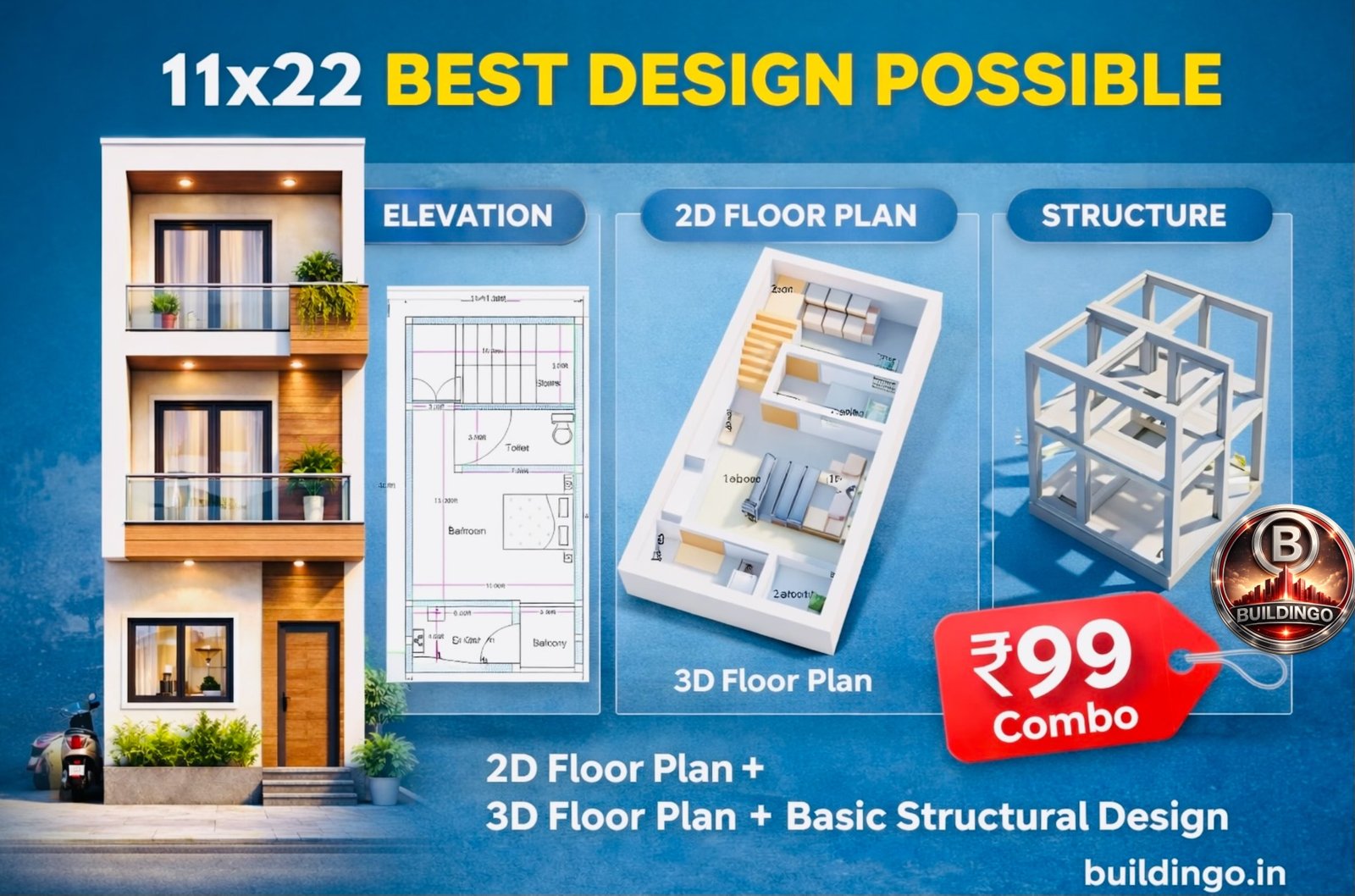
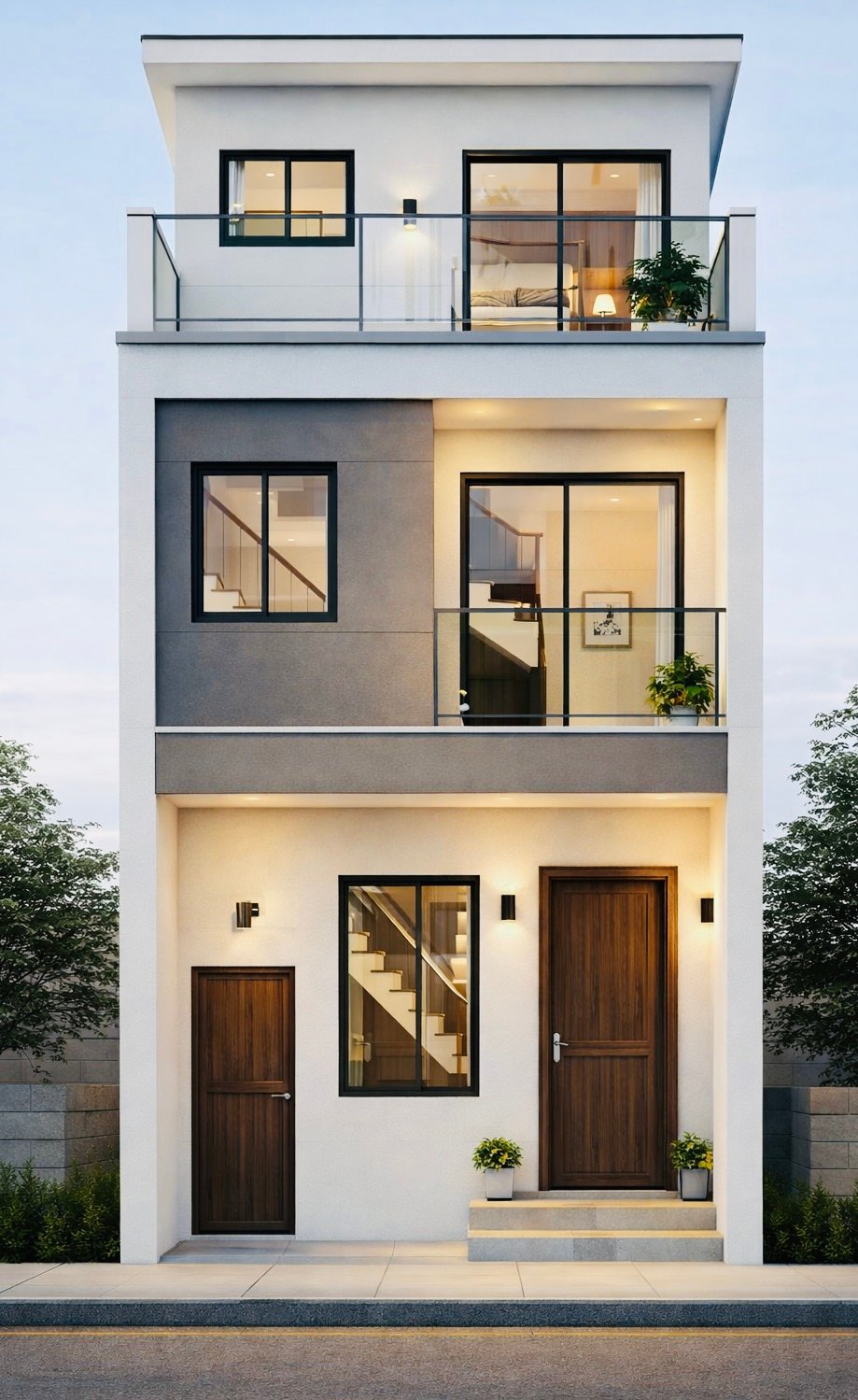
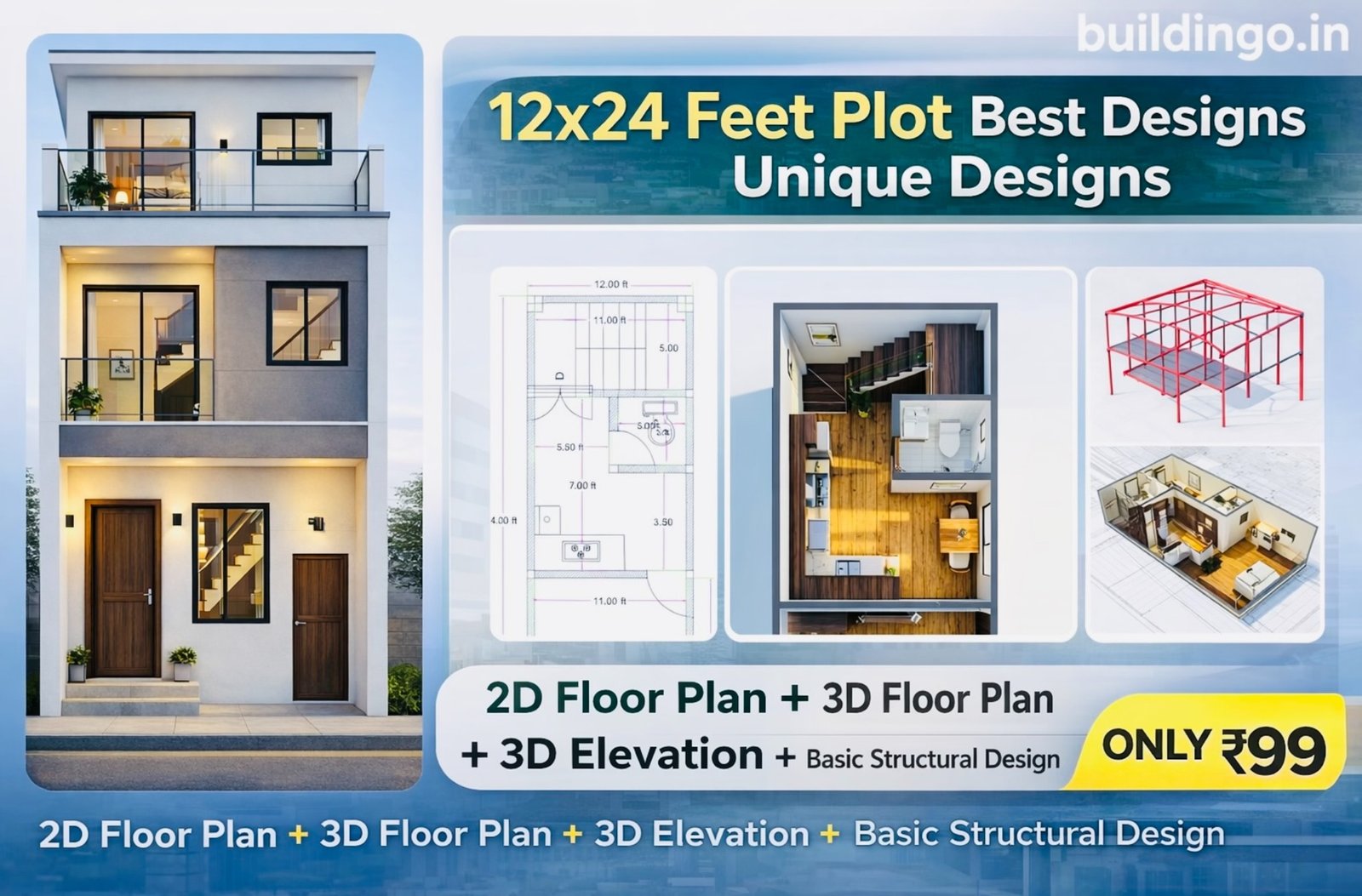
Designing a functional 1BHK on a 12 feet wide and 24 feet deep plot is a true example of intelligent urban compact housing. With only 288 sq.ft per floor, every inch must be carefully planned to ensure structural safety, proper ventilation, cost efficiency, and future expandability. The presented 2D floor plan, 3D floor visualization, elevation design, and structural layout together demonstrate how modern engineering solutions can transform a narrow plot into a livable G+2 structure.
1. Architectural Planning Logic
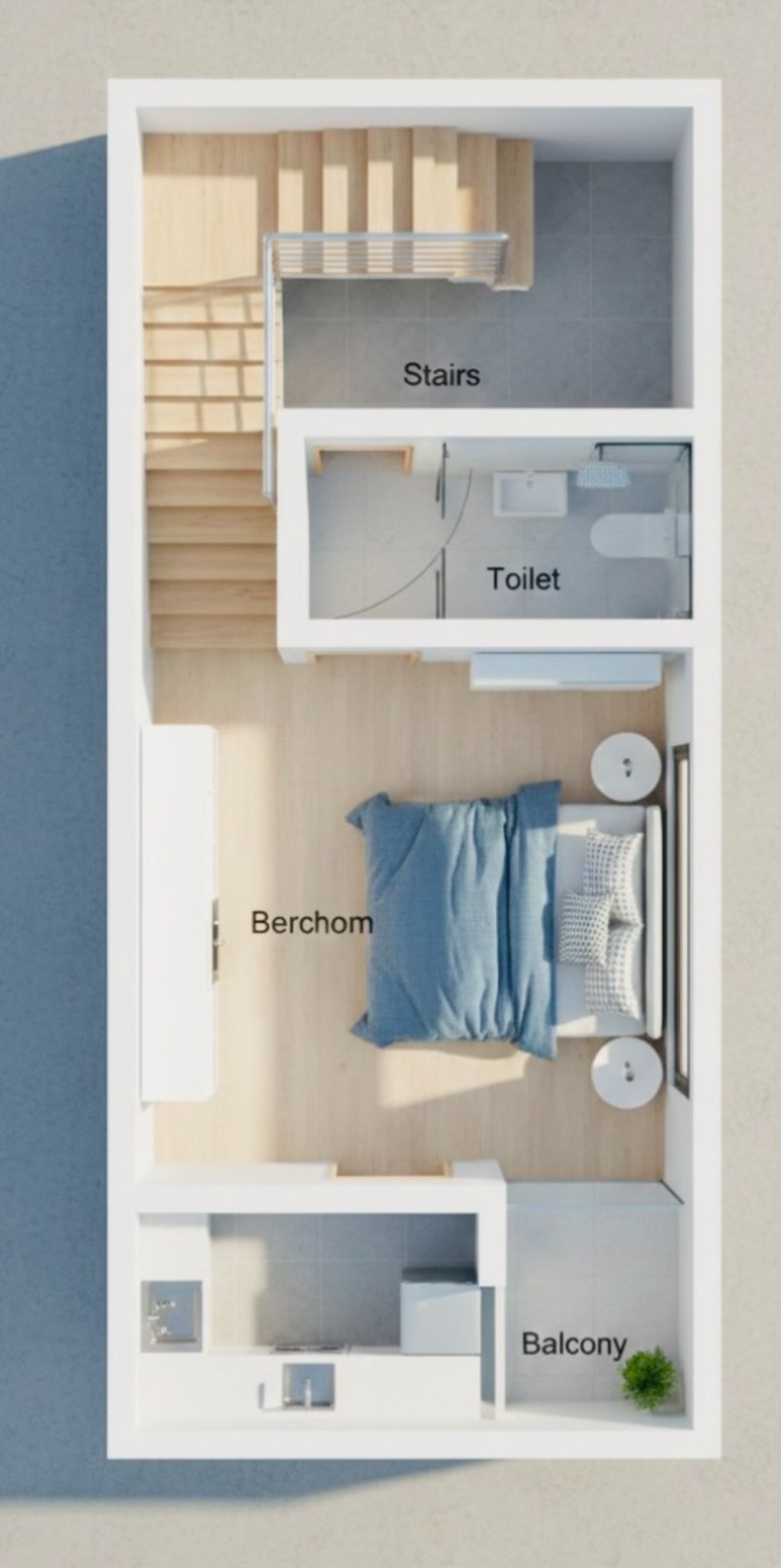
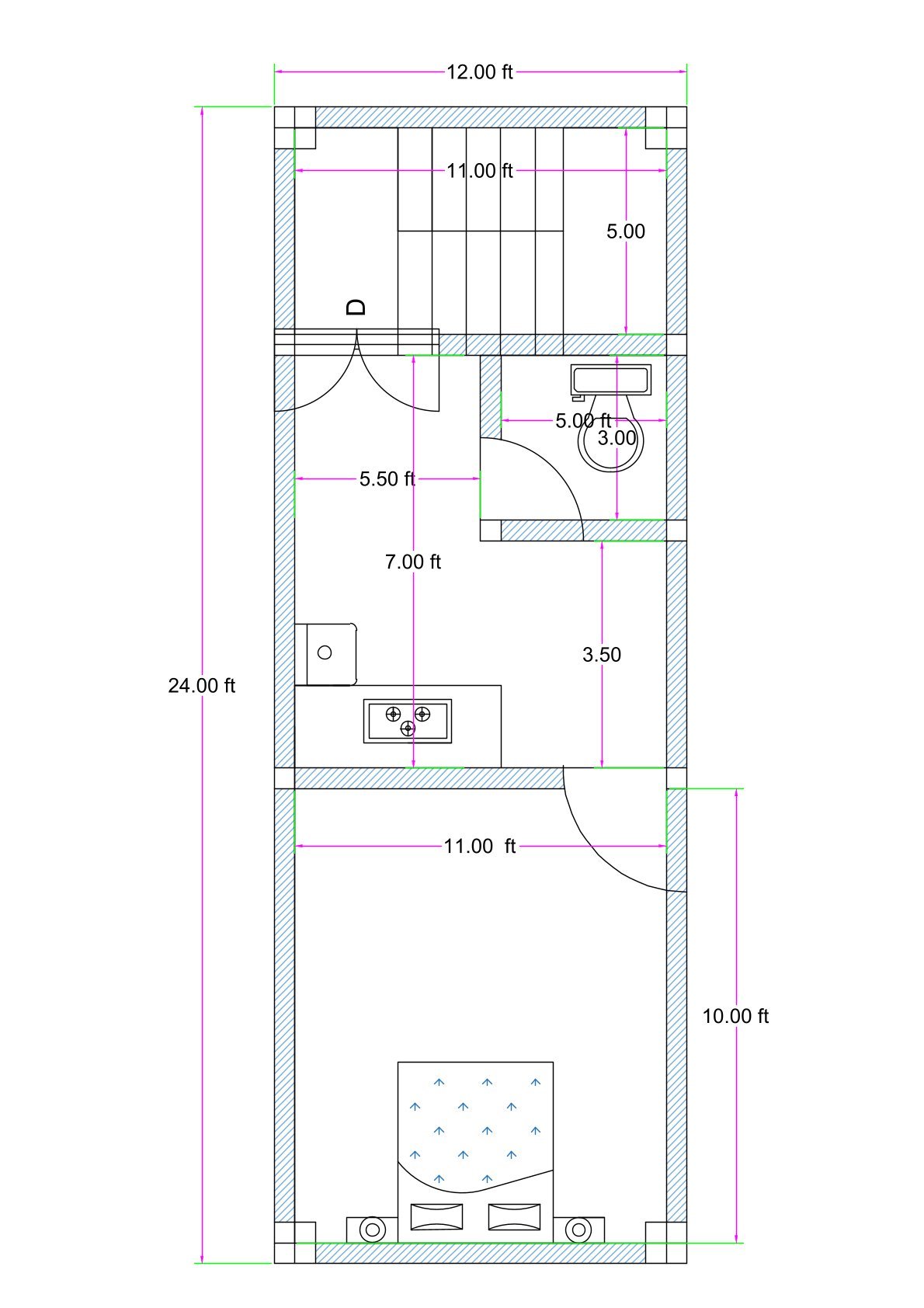
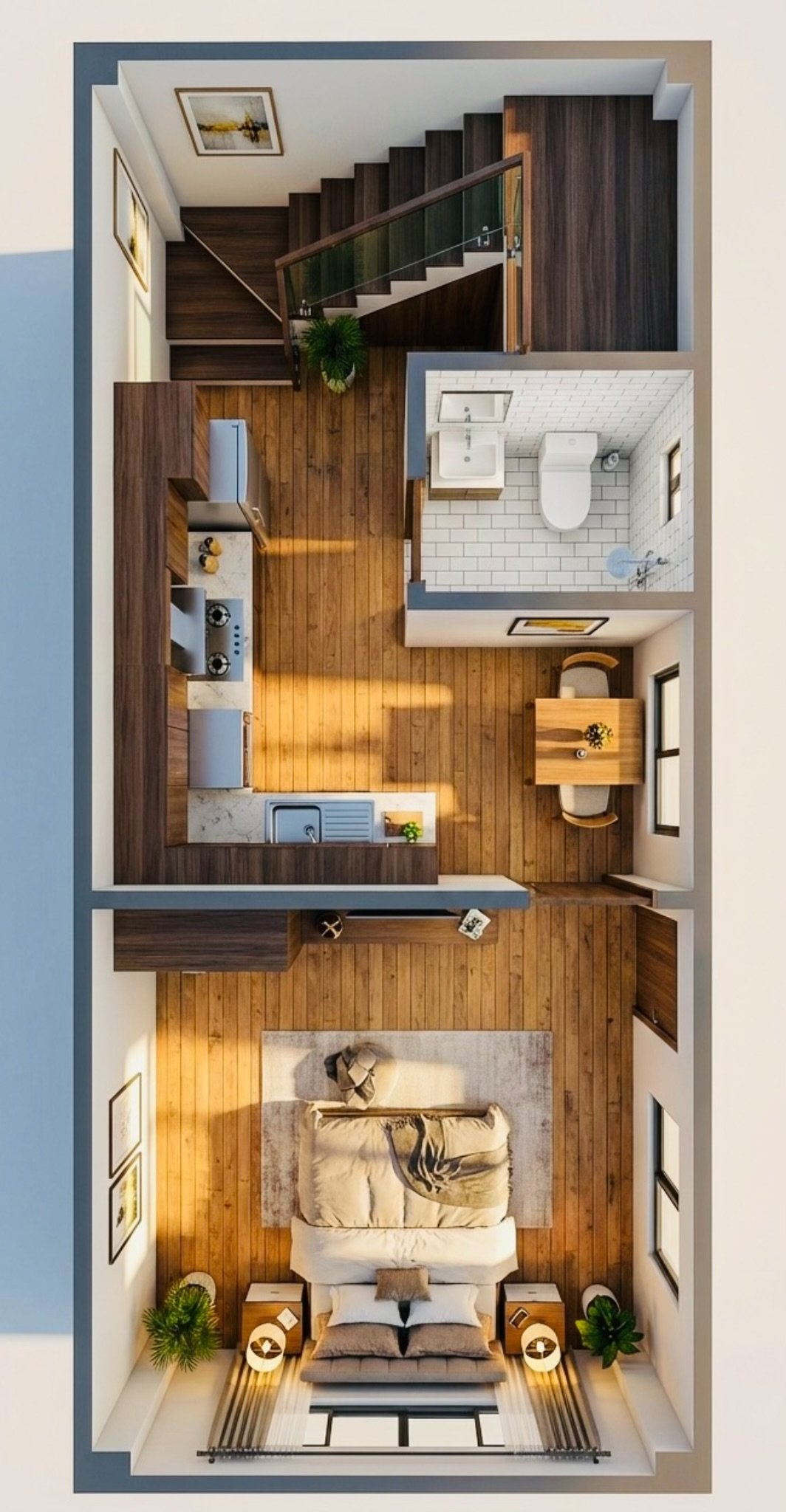
The planning begins with a corner entry door at the front façade. Immediately after entering, a dogleg staircase is placed strategically at the front side. This allows independent vertical circulation so that upper floors can function separately in future — an important feature for rental or multi-family use.
After the staircase zone, the layout transitions into:
- A compact toilet block
- An open kitchen with hall concept
- A rear private bedroom
This linear zoning ensures privacy increases as one moves deeper inside the house.
The open kitchen and hall reduce unnecessary partitions, visually enlarging the limited width. The bedroom at the rear provides acoustic privacy from street noise.
2. Structural Logic & Column Grid Planning
For a 12 ft width structure, structural planning is critical.
Recommended Column Grid:
- Two columns along the front wall
- Two columns along the rear wall
- Intermediate columns near staircase wall
This creates a practical 10–11 ft beam span, which is structurally efficient and economical.
Suggested Column Size:
- 9”x12” or 10”x10” RCC columns (depending on soil and loading)
- 10mm or 12mm main reinforcement bars
Keeping columns aligned vertically from foundation to terrace ensures direct load transfer and reduces bending stress.
3. Beam Spans & Load Transfer Mechanism
Beam Spans:
The effective beam span remains approximately 10–11 ft across width and around 8–10 ft in segments along depth.
Beam Size Recommendation:
- 9”x12” or 9”x15” RCC beams
- 10mm/12mm main bars with proper stirrup spacing
Load Transfer Flow:
Slab Load → Beam → Column → Footing → Soil
The staircase wall can also act as a shear wall element, increasing lateral stability for G+2 construction.
4. Stair Placement Logic
Placing the staircase at the entrance has multiple advantages:
- Independent access to upper floors
- Minimal disturbance to ground floor privacy
- Structural alignment with load-bearing walls
- Easy future vertical expansion
A dogleg staircase reduces required horizontal space while maintaining comfortable riser and tread proportions.
5. Ventilation Challenges in 12 ft Width
Narrow plots often face cross-ventilation issues. Since side setbacks are usually unavailable in urban areas, ventilation depends on:
- Front windows
- Rear bedroom window
- Staircase ventilator
- Toilet exhaust shaft
Modern solution:
Use vertical light shafts, ventilated skylights above staircase, and larger sliding front openings.
The open kitchen concept improves air circulation across depth.
6. Urban Compact Housing Problems
Narrow urban plots face several constraints:
- Limited natural light
- Parking space challenges
- Staircase space consumption
- Privacy conflicts
- Structural congestion due to closely spaced columns
However, smart zoning and vertical planning overcome these limitations.
7. Modern Planning Solutions Used
✔ Open kitchen + hall integration
✔ Vertical staircase planning for future floors
✔ Balcony projection for depth perception
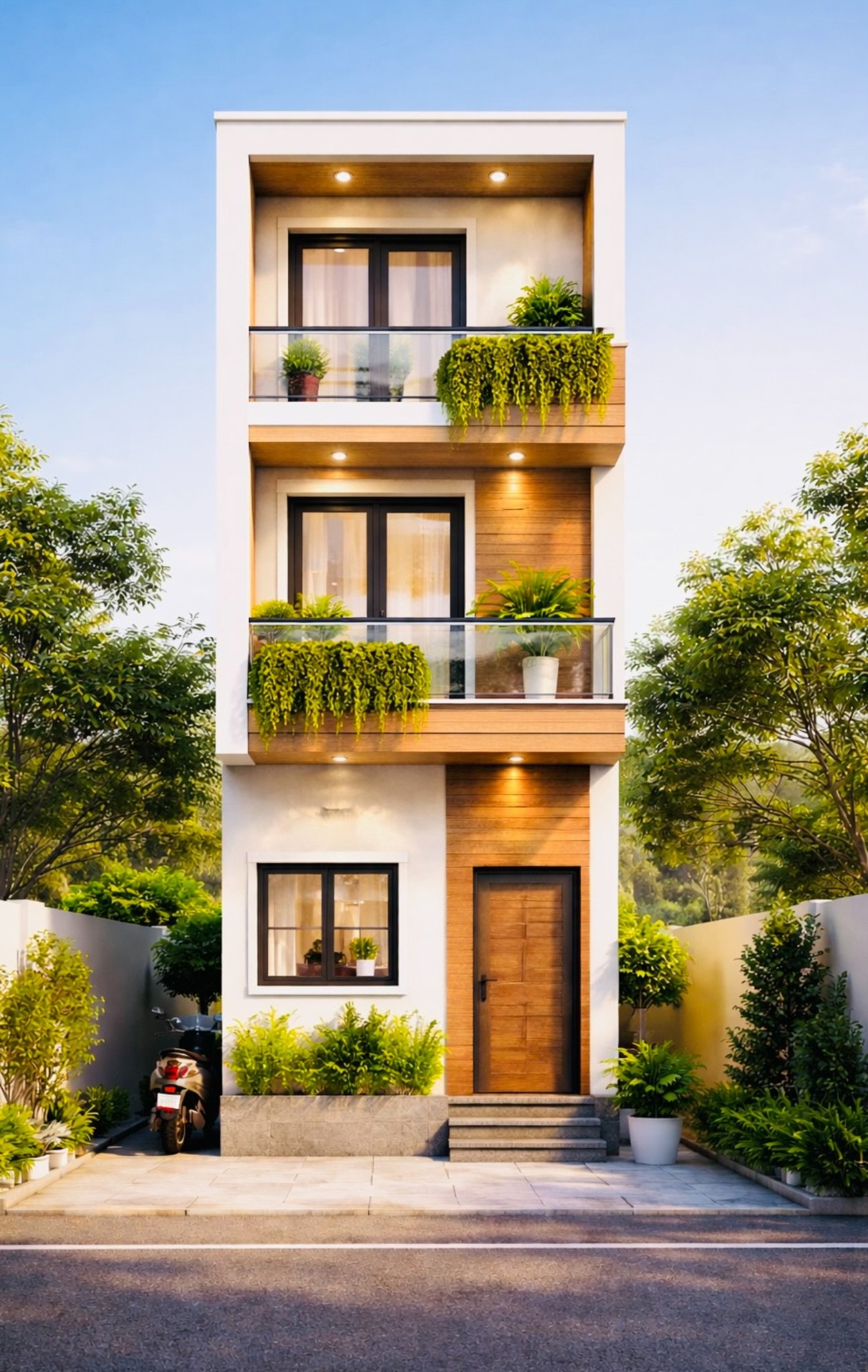
✔ Glass railings in elevation to reduce visual bulk
✔ Minimalistic façade design for modern appeal
The G+2 elevation uses balanced window placement and balcony projection directly above the ground floor entry, maintaining architectural symmetry within narrow width constraints.
8. Practical Execution Challenges
While designing is easier on paper, execution requires:
- Accurate centerline marking for columns
- Strict vertical alignment
- Proper curing of RCC
- Quality control of reinforcement placement
- Waterproofing of toilet and balcony
Small plots leave little room for construction error; hence supervision becomes critical.
9. Cost Efficiency Strategy
Compact houses are economical if designed correctly.
Cost-saving techniques include:
- Standardized beam spans
- Repetition of column grid
- Uniform slab thickness
- Shared plumbing shafts for toilets vertically
Approximate cost remains controlled because smaller spans reduce reinforcement demand.
10. Space Optimization Techniques
- Wall-mounted storage instead of bulky furniture
- Sliding doors instead of swing doors
- Combined dining and living area
- Vertical wardrobe solutions
- Under-stair storage utilization
Every square foot must serve dual purpose.
11. Structural Safety Considerations
For G+2 construction:
- Soil test recommended before footing design
- Footing depth minimum 4–5 ft (depending on SBC)
- Proper anchorage length in columns
- Seismic zone compliance as per IS codes
The structural design shown ensures safe load distribution and durability.
12. Expandability Potential
The most important advantage of this design is vertical expandability.
Because the staircase is at the entrance and column grid is uniform:
- Ground floor can be self-use
- First floor can be rental
- Second floor can be future expansion
This makes the 12×24 plot financially practical for middle-class urban families.
Conclusion
A 12×24 feet plot may seem restrictive, but with intelligent structural planning, optimized column grid, controlled beam spans, and modern architectural solutions, a fully functional 1BHK G+2 ready house is absolutely feasible.
The presented 2D plan, 3D visualization, elevation, and structural layout together prove that compact urban housing can be:
- Safe
- Economical
- Expandable
- Ventilated
- Aesthetically pleasing
In growing cities where land is scarce, such smart micro-housing solutions represent the future of sustainable urban living.
इस ब्लॉग का हिंदी (वास्तु विश्लेषण सहित) संस्करण पढ़ने के लिए यहाँ क्लिक करें।