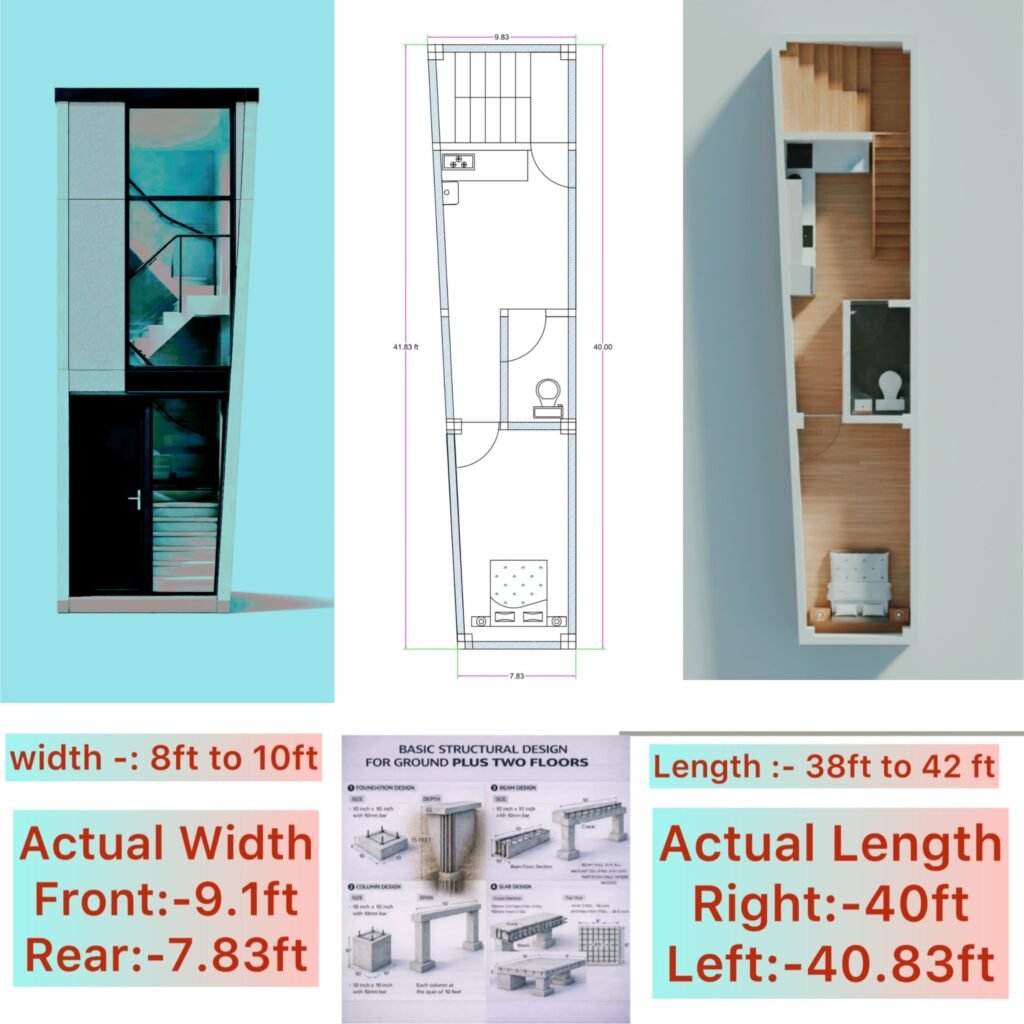

Buildingo – Part 1 :- From the First Home Ever Built to the Future of Homes
Have you ever wondered where your home truly began?
Not your house…
Not your city…
But the very first home ever built.
Before modern architecture.
Before bricks and concrete.
Before even humans.
How did the first creatures build homes?
Did humans learn from animals?
When was the first house built?
And why are we today returning to tiny homes again?
This is the 2-million-year story of the small home —
from prehistoric shelters to the future of tiny living.
Download 2D Floor Plan For Free Build Your Dream Home Today
Long before humans built structures, animals engineered shelters for survival. These appeared hundreds of millions of years ago.
What if I told you…
The home you live in today
is part of a story that began over 2 million years ago?
Not in one country.
Not on one continent.
But across Africa, Asia, Europe, Australia — and eventually the Americas.
This is not the story of mansions or skyscrapers.
This is the story of the small human home —
the hut, the cottage, the cabin, the mud house, the tiny dwelling.
From the first shelter ever built…
to the future of tiny homes on a warming planet.
Let’s begin at the beginning.

Examples:
- Bird nests (~150+ million years ago): woven from twigs, mud, feathers.
- Beaver lodges: engineered wood-and-mud domes with underwater entrances.
- Termite mounds: climate-controlled structures with ventilation systems.
- Burrowing mammals: underground thermal regulation.
Key Functions of Early Animal Homes:
- Protection from predators
- Thermal insulation
- Reproduction and nurturing
- Food storage
Did Humans Learn From Animals?
There is no direct archaeological proof that humans consciously copied animals. However:
- Early humans observed nature constantly
- Natural shelters (caves, overhangs, burrows) inspired early habitation
- Material usage (mud, branches, grass) mirrors animal construction
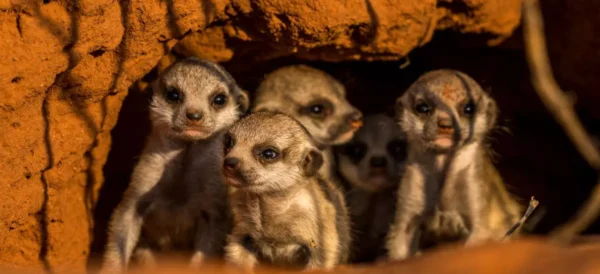
Most scholars suggest parallel evolution rather than imitation — both animals and humans solved the same survival problems.
Before cities…
Before countries…
Before language as we know it…
There was a question every living creature had to answer:
Where will I sleep tonight?
Long before humans walked upright,
animals were already architects.
They built with instinct.
With mud.
With sticks.
With snow.
They built small.
Not to impress.
But to survive.
Download Unlimited 3D Floor Plan For Free
Then, somewhere in Africa — over two million years ago —
early humans stepped into a cave.
Not to admire it.
But to survive another night.
That cave was not just shelter.
It was the beginning of something extraordinary.
[African savanna → Middle Eastern desert → snowy Europe → forests of China → Indian plains → Australian outback → Arctic ice.]
Across every continent…
Humans faced the same forces:
- Cold.
- Heat.
- Rain.
- Wind.
- Predators.
- Darkness.

And everywhere —
they responded the same way.
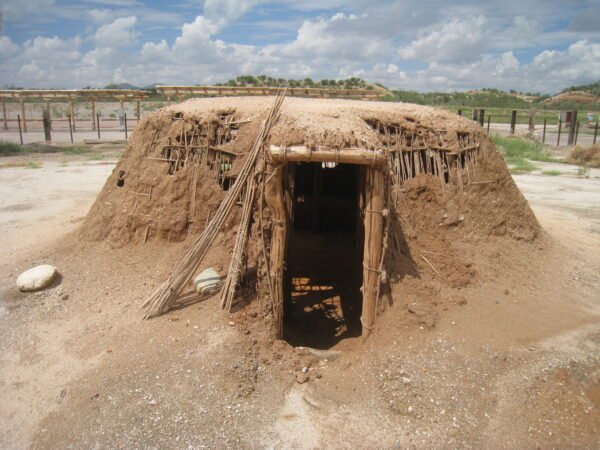
They built small shelters.
Tiny windbreaks.
Mud huts.
Pit houses.
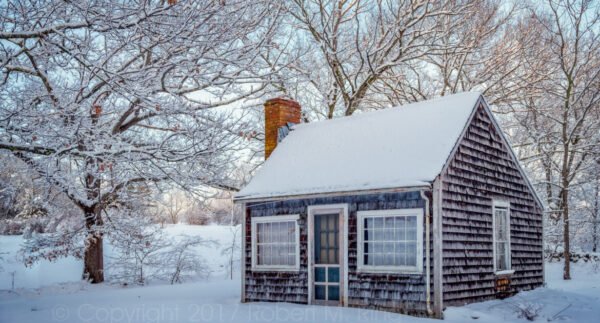
Log cabins.
Stone cottages.
Different materials.
Different climates.
Different cultures.
But always the same scale:
Small.
Single-family.
Human-sized.
[Modern tiny house appears in forest. Solar panels. Minimal interior.]
And now, thousands of years later…
In a world of skyscrapers and sprawling cities…
Something surprising is happening.
We are going small again.
Tiny homes.
Minimalist living.
Off-grid cabins.
Why?
Is this new?
Or are we returning to something ancient?
3D Front Elevations Free Download Click Here
This is not just a story about buildings.
It’s a story about survival.
About adaptation.
About intelligence.
About how humans learned —
from nature, from climate, from necessity.
Did we learn from animals?
Did we invent shelter from imagination?
How did the very first home look?
What happened 12,000 years ago that changed everything?
And why might the future of housing look more like our past than we expect?
From the first human shelter in Africa
to the future of intelligent micro-living…
This is the complete global history
of the small home.
And it begins
at the very beginning.
PART 1 — BEFORE HUMANS
 Nature: The First Architect of Small Homes
 Nature: The First Architect of Small Homes
Before humans ever shaped wood…
before hands molded mud…
before fire lit the darkness…
Shelter already existed.

Not designed.
Not engineered with tools.
But built.
Across forests, deserts, tundras, and oceans —
life had already solved the problem of survival.
And it solved it with something small.
SECTION 1 — THE FIRST BUILDERS: BIRDS (150+ Million Years Ago)
 SECTION 1 — THE FIRST BUILDERS: BIRDS (150+ Million Years Ago)
Long before mammals dominated the Earth, birds were constructing nests.
Tiny structures made of:
- Twigs
- Mud
- Leaves
- Feathers
- Spider silk
These nests were:
- Lightweight
- Insulated
- Elevated from danger
- Built precisely for one family
Some birds engineered hanging nests to avoid predators.
Others built ground nests camouflaged in grasslands.
Every design answered one question:
How do I protect my young in the smallest possible space?
The first tiny homes were not houses.
They were nests.
SECTION 2 — ENGINEERS OF WATER: BEAVERS
 SECTION 2 — ENGINEERS OF WATER: BEAVERS
In North America and Eurasia, beavers built dome-shaped lodges from:
- Logs
- Mud
- Stones

Their structures included:
- Underwater entrances
- Dry sleeping chambers
- Thick insulating walls
These lodges maintained stable internal temperatures
even during freezing winters.
This was not random stacking.
This was environmental engineering.
A compact, self-contained survival unit.
SECTION 3 — CLIMATE MASTERS: TERMITES (Africa & Asia)
 SECTION 3 — CLIMATE MASTERS: TERMITES (Africa & Asia)
Termites created towering earthen mounds across Africa and Asia.
Inside:
- Ventilation shafts
- Temperature regulation systems
- Moisture control
Even when outside temperatures fluctuate drastically,
the interior remains stable.
These are small living chambers
within highly efficient systems.
Tiny living spaces.
Maximum efficiency.
SECTION 4 — BURROWS: EARTH AS SHELTER
 SECTION 4 — BURROWS: EARTH AS SHELTER
Across continents:
- Foxes burrowed underground.
- Early mammals dug insulated tunnels.
- Rodents built complex subterranean networks.
- In Arctic regions, animals used snow dens for insulation.
Underground homes offered:
- Stable temperature
- Predator protection
- Energy efficiency
This principle —
using earth itself as insulation —
will later appear in early human pit houses.
SECTION 5 — POLAR ADAPTATION
 SECTION 5 — POLAR ADAPTATION
In Antarctica and Arctic regions:
- Penguins build circular stone nests.
- Arctic animals dig snow shelters.
Even snow becomes architecture.
Cold environments produce compact, enclosed designs.
The harsher the climate,
the smaller and more efficient the shelter.

SECTION 6 — WHAT DOES THIS MEAN FOR HUMANS?
 SECTION 6 — WHAT DOES THIS MEAN FOR HUMANS?
[Visual: Early human silhouette watching birds build.]
Did humans copy animals directly?
There is no evidence that early humans consciously said:
“Let’s build like a beaver.”
But early humans lived surrounded by these structures.
They observed:
- Mud hardening in the sun
- Branches interlocking naturally
- Snow insulating interiors
- Burrows staying warm
Premium Building Designs For Any Specific Plot in $1 or 99 Indian Ruppes Download Complete Drawing Search Designs For Your Plot Size
More importantly:
Humans and animals faced the same survival pressures.
Cold.
Rain.
Predators.
Darkness.
When survival demands efficiency,
solutions often look similar.
Not imitation.
Parallel evolution.
SECTION 7 — A UNIVERSAL PATTERN
 SECTION 7 — A UNIVERSAL PATTERN
Across all continents, long before humans built homes, one truth existed:
Shelter was always:
- Small
- Purposeful
- Resource-efficient
- Environmentally responsive
There were no oversized structures in nature.
There was no waste.
Only survival-driven design.
And when humans finally began building their own shelters…
They would follow the same rules.
2.5 Million Years Ago – Early Homo Species
- Used natural caves
- Built windbreaks using branches
- No permanent structures
~400,000 Years Ago – Controlled Fire
Fire changed housing dramatically:
- Enabled occupation of colder regions
- Required designated interior spaces
- Encouraged repeated use of certain shelters
~300,000 Years Ago – Early Hut Evidence
At sites like Terra Amata (France), archaeologists found:
- Post holes
- Stone foundations
- Oval hut layouts
These were likely:
- Temporary
- Small (family-sized)
- Single-room
- Built from wood and animal hides
These represent the first constructed tiny homes.
Stay Tuned For Part 2